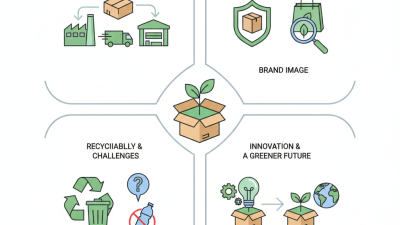
Global buyers need more than attractive cartons. They need reliable cardboard packaging that protects products, controls costs, and supports measurable sustainability goals.
The Smithers report, The Future of Corrugated Packaging to 2029, identifies continued growth in corrugated demand across e-commerce, food, and consumer goods. CEPI also reported an 82% paper recycling rate in Europe in 2022. These figures show strong recovery potential. They do not guarantee every box will be recycled. Local collection systems, coatings, inks, and contamination still matter.
Walter Soroka, author of Fundamentals of Packaging Technology, defines packaging as “the science, art, and technology of enclosing and protecting products for distribution, storage, sale, and use.” His definition remains practical for international sourcing. A dependable China supplier should apply that thinking through verified materials, compression testing, moisture checks, and controlled production records. Buyers should also request FSC or equivalent chain-of-custody evidence when responsible fiber sourcing matters.
Details reveal quality. A carton should arrive with clean folds, sharp print registration, and consistent board thickness. It should survive stacking in a humid container, not only look impressive in a sample room. This is where supplier claims require careful review. No factory is perfect. Even strong suppliers can face seasonal fiber changes, transport delays, or color variation.
The best partner communicates these risks early. They provide clear specifications, pre-production samples, inspection reports, and realistic lead times. For global buyers, cardboard packaging becomes a strategic tool, not merely a shipping container. Performance must be tested. Sustainability must be documented. Confidence should be earned, not assumed.
A China cardboard packaging supplier is a manufacturing partner that designs, produces, and manages paper-based packaging for international buyers. Its role extends beyond making cartons. A capable supplier studies product dimensions, shipping conditions, stacking pressure, and presentation requirements before recommending materials.
For example, a double-wall carton may protect heavy goods during long transport, while a folding box suits lighter retail items.
Experienced suppliers also prepare prototypes, check dielines, and adjust printing before mass production.
Reliable cooperation depends on visible processes. Buyers should request material specifications, pre-production samples, inspection records, and clear delivery terms. Moisture testing and compression testing can reveal weaknesses that look invisible on a clean sample.
A professional supplier should explain paper grades, ink options, tolerances, and recycling considerations in practical language. It should also support export documentation and communicate delays early. No supplier is perfect. Even a well-managed order may face color variation or a small sizing error, so written approval points remain important.
Tips: Compare at least three samples before choosing. Measure the packed product, not only the empty box. Ask how rejected cartons are handled. Confirm testing methods, production capacity, and replacement terms. A factory visit or live video inspection can provide useful evidence, although it cannot replace independent quality checks. Keep one approved sample for future comparison. Small details matter.
Global buyers increasingly need packaging that protects products and communicates value. Smithers estimates the global corrugated packaging market will exceed US$200 billion before 2030. That growth reflects demand for efficient shipping and lower material use.
The main product types include corrugated shipping boxes, folding cartons, rigid gift boxes, mailer boxes, and die-cut retail packs. Corrugated boxes suit heavier goods and long-distance distribution. Folding cartons work well for cosmetics, food, and small consumer products. Rigid boxes offer a stronger presentation, but they usually require more material and higher freight costs.
Customization begins with structure. Suppliers can adjust flute profiles, board grades, dimensions, partitions, handles, and opening styles. Printing options include flexographic, offset-laminated, and digital processes. Water-based coatings, matte finishes, embossing, and foil effects can change the shelf appearance. Some details matter more than expected.
FEFCO reports that European corrugated output reached roughly 48 billion square metres in 2023, showing the scale of this packaging sector. Yet volume does not guarantee quality. Buyers should request compression tests, edge-crush data, color samples, and production tolerances. A box that looks perfect may still fail in humid storage.
I have seen projects overfocus on artwork while ignoring pallet stacking. That is a costly mistake. Confirm carton performance, recycled content, minimum order quantity, tooling charges, and export documentation before approval. Prototype testing should include vibration, drop, and moisture exposure. Even then, real distribution conditions can surprise you.
Choosing a China cardboard packaging supplier requires more than comparing price lists. A 2024 global corrugated packaging forecast valued the market above 200 billion US dollars, increasing pressure on factories to deliver consistent volume. Ask for recent test reports covering paper grammage, moisture, burst strength, and edge crush strength. Request samples from different production batches, not only a polished showroom sample.
Production capacity should be verified on the factory floor. Check the number of corrugators, printing lines, die-cutters, and shifts. Compare declared monthly output with machine speed, changeover time, maintenance records, and current orders.
A capacity figure without these details is weak evidence. Very weak.
Quality control should include incoming paper inspection, in-process checks, and final random sampling. ISO 9001 certification supports process discipline, but it does not guarantee strong cartons. The 2023 ISO Survey recorded more than one million ISO 9001 certificates worldwide, showing its wide adoption rather than supplier superiority. Ask whether the factory retains batch records and investigates failed tests.
Sustainability also deserves measurable proof. European paper industry statistics reported a paper recycling rate near 80% in recent years, yet recycled fibre can vary in strength and moisture. Suppliers should explain fibre composition, compression targets, and storage controls. In practice, no audit is flawless. A trial order, third-party inspection, and live production video can reveal gaps that documents hide. Personally, I would treat unusually low prices as a warning, not an advantage.
Best China Cardboard Packaging Supplier for Global Buyers
International ordering begins with clear product specifications. Share box dimensions, board grade, printing colors, load weight, and expected order volume. A reliable supplier should provide samples before mass production. Check folding accuracy, edge strength, color consistency, and odor. Small defects often become expensive problems after shipping.
Compliance requires more than a factory certificate. Confirm the correct HS code, material composition, labeling rules, and recycling requirements in the destination market. Food-contact packaging may require additional testing and migration documents. Ask for traceable test reports, production records, and quality-control photos. Wooden pallets may need treatment under ISPM 15 rules. Requirements differ by country, so local verification remains essential. Never rely on an old document.
Shipping terms must be written clearly. Compare EXW, FOB, CIF, and DDP only after understanding their risks. Confirm carton counts, gross weight, pallet dimensions, and container loading plans. Request a commercial invoice, packing list, bill of lading, and certificate of origin when required. Sea freight usually reduces cost, but it demands longer planning. Air freight is faster and less forgiving. Build time for port congestion, customs inspection, and possible rework. A low unit price can hide weak packaging protection or unexpected destination charges. That lesson is easy to miss. Keep a written approval sample, inspection standard, and claims process before payment. Clear records create accountability when plans change.
Practical reference data for evaluating cardboard packaging orders from China. Requirements may vary by destination country, product type, transport mode, and contract terms.
| Evaluation Dimension | Reference Data or Standard | Typical Requirement | International Ordering Consideration | Shipping or Compliance Impact |
|---|---|---|---|---|
| Product Classification | HS 4819.10 is commonly used for cartons, boxes, and cases made of corrugated paper or paperboard. | Conditional | Confirm the exact HS classification with the importer, customs broker, and destination customs authority before placing the order. | The HS code affects import declarations, duty calculation, statistical reporting, and documentary consistency. |
| Non-Corrugated Folding Cartons | HS 4819.20 is commonly associated with folding cartons, boxes, and cases made of non-corrugated paper or paperboard. | Conditional | Specify whether the packaging is corrugated, solid paperboard, folding, rigid, coated, or laminated. | Different construction types may require different tariff classifications and product descriptions on commercial documents. |
| Corrugated Board Structure | Common structures include single-wall board with three paper layers and double-wall board with five paper layers. | Recommended | Request the flute profile, board grade, paper basis weight, edge-crush or burst specification, and finished-box dimensions. | Board structure affects compression strength, stacking performance, product protection, carton weight, and freight cost. |
| Packaging Dimensions | Dimensions should be stated in a consistent order, such as length × width × height, with units clearly identified in millimetres or inches. | Required | Approve a technical drawing or pre-production sample showing internal and external dimensions. | Small dimensional differences can change pallet patterns, container utilization, dimensional weight, and product fit. |
| Carton Volume Calculation | Carton volume in cubic metres = length (m) × width (m) × height (m) × quantity. | Required | Calculate total CBM before confirming the purchase order and compare it with the planned transport capacity. | CBM is used for sea-freight planning and may be relevant to less-than-container-load quotations. |
| Container Planning | Approximate nominal internal capacities are about 33 m³ for a 20-foot general-purpose container, 67 m³ for a 40-foot general-purpose container, and 76 m³ for a 40-foot high-cube container. | Recommended | Use actual carrier equipment specifications because door openings, payload limits, carton shape, and loading method reduce usable capacity. | Carton dimensions and stacking orientation can determine whether cargo fits by volume, weight, or door clearance. |
| Palletization | Common export pallet footprints include approximately 1,200 × 1,000 mm and 1,200 × 800 mm, subject to destination and customer requirements. | Conditional | Confirm pallet size, maximum stack height, carton-per-layer pattern, stretch wrapping, corner protection, and total pallet weight. | Pallet dimensions affect warehouse handling, truck loading, container utilization, and possible oversized-freight charges. |
| Wood Packaging Compliance | ISPM 15 applies to solid-wood packaging materials used in international trade, including many wooden pallets and crates. | Conditional | If wooden pallets, skids, or crates are used, request compliant treatment and the required official marking. | Corrugated cardboard itself is not solid wood packaging, but non-compliant wooden supports can cause inspection, treatment, re-export, or disposal issues. |
| Recyclability and Material Disclosure | Disclose paperboard, coatings, adhesives, inks, laminations, plastic windows, handles, and other components in the packaging specification. | Recommended | Ask for a complete bill of materials and identify whether the destination market has recyclability, labeling, or producer-responsibility rules. | Mixed materials may affect recycling claims, waste fees, labeling obligations, and customer sustainability requirements. |
| European Union Packaging Rules | The EU Packaging and Packaging Waste Regulation, Regulation (EU) 2025/40, entered into force in 2025 and introduces requirements that apply progressively from 2026 onward. | Conditional | Confirm the importer’s responsibility for packaging data, labeling, recyclability, restricted substances, and extended producer-responsibility registration. | Requirements can vary according to the product, packaging format, importer role, and Member State implementation procedures. |
| Food-Contact Packaging | Packaging intended to directly contact food may be subject to destination-specific food-contact rules, migration limits, good manufacturing practice, and supporting declarations. | Conditional | State the intended use and request appropriate material declarations and test documentation before production. | Packaging suitable for general consumer goods may not be suitable for direct food contact or sensitive applications. |
| Printing and Artwork Approval | Printing specifications should identify colour references, artwork version, barcode requirements, ink coverage, print location, and tolerances. | Required | Use a signed artwork proof and, for colour-sensitive projects, approve a physical sample or agreed colour standard before mass production. | Late artwork changes can create rework, wasted printed stock, production delays, and customs-document mismatches. |
| Pre-Production Sample | A physical sample can verify dimensions, folding, die-cutting, print placement, assembly, fit, and closure performance. | Recommended | Define sample approval criteria and clarify whether the sample is made with production-equivalent materials and tooling. | Sample approval reduces the risk of receiving cartons that cannot be assembled, stacked, or used with the packed product. |
| Quality Inspection | Inspection plans commonly cover quantity, dimensions, material construction, print quality, workmanship, compression performance, and packaging condition. | Recommended | Agree inspection timing, sampling method, defect classifications, acceptance limits, and corrective-action procedures in writing. | Inspection before shipment provides more practical remedies than discovering defects after international delivery. |
| Export Documentation | Typical documents include a commercial invoice, packing list, transport document such as a bill of lading, and any destination-specific certificates requested by the buyer or authorities. | Required | Ensure product descriptions, quantities, weights, carton counts, HS code, declared value, and consignee details are consistent across documents. | Inconsistent or incomplete documents may cause customs delays, amendment fees, examination, or clearance problems. |
| Incoterms® 2020 | Common sea-freight terms include FOB, CFR, and CIF; the named place or port must be stated precisely. | Required | Specify the selected Incoterms® rule together with the named port or place, transfer point, insurance responsibility, and local charges. | The term determines allocation of transport costs, risk transfer, export responsibilities, and parts of the import process. |
| Freight Mode | Sea freight is generally suitable for larger, less time-sensitive orders; air freight is faster but normally has a higher transport cost per kilogram or chargeable volume. | Recommended | Compare total landed cost, production readiness, cargo volume, urgency, and destination delivery requirements before selecting the mode. | Cardboard is bulky relative to its weight, so dimensional volume can strongly influence air-freight pricing. |
| Lead-Time Planning | Production timing depends on material availability, tooling, printing, order quantity, sampling, inspection, and seasonal capacity. | Recommended | Use a written schedule covering artwork approval, sampling, production, inspection, booking, port cut-off, transit, customs, and final delivery. | Public holidays, port congestion, blank-sailing events, customs inspections, and document corrections can extend the total schedule. |
| Insurance and Cargo Protection | Insurance responsibility depends on the selected sales term; under CIF, the seller arranges the required minimum insurance specified by the applicable Incoterms® rule unless otherwise agreed. | Conditional | Confirm coverage level, insured value, exclusions, claim procedure, and whether the policy covers water damage, crushing, moisture, and handling risks. | Cardboard can be damaged by water, compression, puncture, and poor stacking during storage and transit. |
| Moisture Protection | Corrugated paperboard loses performance when exposed to moisture; protective measures may include dry storage, container liners, desiccants, or moisture-resistant specifications. | Recommended | Define storage conditions, moisture tolerance, wrapping requirements, and whether the packaging will travel through humid or rainy regions. | Moisture can reduce compression strength, deform cartons, damage printing, and increase product-loss risk. |
| Landed-Cost Review | Total landed cost normally includes product price, tooling, sampling, inland transport, export charges, ocean or air freight, insurance, duties, taxes, customs clearance, and destination delivery. | Required | Compare quotations using the same specifications, quantity, Incoterms® rule, currency, payment terms, and destination assumptions. | A lower unit price can be offset by higher tooling, freight, duty, palletization, clearance, or last-mile delivery costs. |

Best China Cardboard Packaging Supplier for Global Buyers
Cost Factors and Supplier Selection Criteria
Choosing a cardboard packaging supplier requires more than comparing unit prices. Board grade, box dimensions, printing coverage, and order quantity strongly affect the final cost. Kraft, corrugated, and coated boards serve different protection needs. A lighter board may reduce freight expenses, but it can fail under stacking pressure. Cheap packaging is not always economical.
Ask for a physical sample before approving production. Check folding accuracy, edge strength, color consistency, and surface finish. Request a clear quotation with tooling, sampling, packing, and shipping costs listed separately. Freight can change significantly with carton volume and delivery terms. Small details matter.
Review the supplier’s quality process and production experience. Reliable factories should explain material sourcing, moisture control, inspection steps, and corrective actions. Photos are useful, but inspection records are stronger evidence. Confirm their ability to handle your required quantity and delivery schedule. Communication speed also matters. Delays often begin with unclear artwork or missing specifications.
A capable supplier should provide realistic lead times, not attractive promises. Request references or export documentation when appropriate. Independent inspections can reduce risk before shipment. Still, no supplier is perfect. Some quotations hide costs, while some samples look better than mass production. Leave room for testing, revision, and honest doubt.
This benchmark illustrates the typical cost structure of corrugated cardboard packaging purchased internationally. Paper and board materials usually represent the largest cost component, while conversion, printing, logistics, and tooling contribute to the remaining landed cost. Buyers should also evaluate quality consistency, production capacity, sustainability compliance, lead time, and export experience when selecting a supplier.
© 2025 Cardboard Tubes | Registered in England and Wales.
Company Number 2402078