
What Is a Cardboard Roll and What Is It Used For?

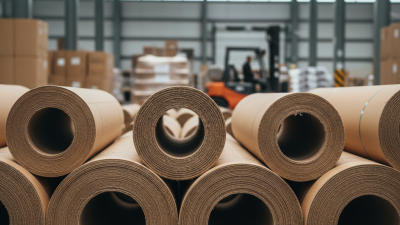
A cardboard roll is a wound paperboard cylinder, usually formed around a central core. It may look simple, but its engineering affects packaging, shipping, storage, and manufacturing performance. Manufacturers produce rolls from recycled fiber, virgin kraft paper, or blended grades. Their thickness, diameter, moisture resistance, and compression strength determine practical use.

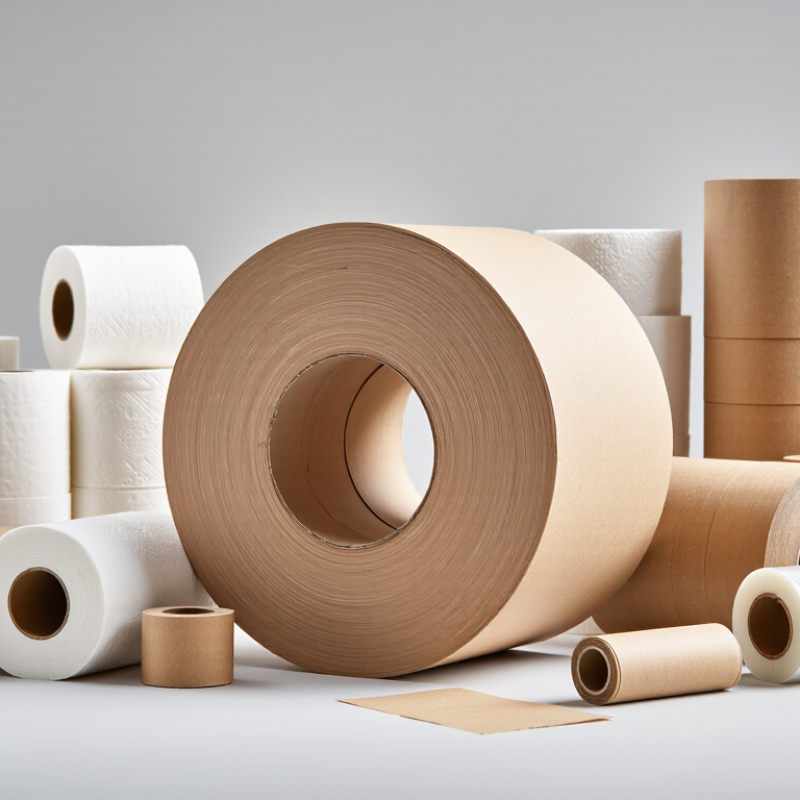
Common applications include toilet paper, kitchen towels, labels, stretch film, textiles, carpets, posters, and protective packaging. A narrow roll can support adhesive tape or printed labels. A heavy-duty cardboard roll can protect fabric during transport. The core must remain round and stable. A crushed core can interrupt automated production and create costly material waste.

The market context is significant. The U.S. Environmental Protection Agency reported 67.4 million tons of paper and paperboard in municipal solid waste in 2018. About 46.9 million tons were recycled. CEPI’s 2023 statistics also showed Europe’s paper recycling rate remaining above 80 percent. These figures support cardboard’s recovery potential, although recycling performance depends on coatings, adhesives, contamination, and local collection systems.

Ellen MacArthur, a leading circular-economy authority, stated, “A circular economy is restorative and regenerative by design.” Her principle fits cardboard roll production, but the material is not automatically sustainable. Energy use, fiber sourcing, transport distance, and end-of-life handling still matter. This article examines what a cardboard roll is, how it is manufactured, and why small design choices matter. The honest answer is less glamorous: performance and sustainability must be measured together.
What Is a Cardboard Roll and What Is It Used For?

Definition and Basic Structure of a Cardboard Roll

A cardboard roll is a continuous sheet of paperboard wound around a cylindrical core. Its basic structure is simple, but each layer serves a practical purpose. The core provides stiffness and keeps the roll’s shape during storage and transport. The wound paperboard forms the usable body, while the outer layer protects the surface from dust, scuffing, and limited moisture exposure.

Manufacturers usually control three details: core diameter, sheet thickness, and winding tension. These measurements affect feeding speed, cutting accuracy, and roll stability. A loose roll may telescope at the edges. A tightly wound roll can deform the core. Small defects matter.

The Food and Agriculture Organization reported global paper and paperboard production at approximately 415 million tonnes in 2022. This large material flow supports packaging, printing, construction protection, and industrial converting. Cardboard rolls may hold labels, wrapping sheets, protective films, or adhesive materials. Some also become temporary spacers or edge protectors.

Recyclability depends on composition and contamination. The Confederation of European Paper Industries reported a paper recycling rate of about 82% in Europe in 2022. However, coated surfaces, wet fibers, and mixed materials can reduce recovery quality. A cardboard roll is not automatically recyclable in every form.

From hands-on handling, moisture appears to be the most underestimated problem. Even a clean warehouse can expose rolls to humidity changes. This is where basic specifications sometimes need rethinking. A diameter drawing alone cannot describe real performance. The roll must also survive stacking, movement, and repeated machine feeding.

Common Materials and Manufacturing Process

A cardboard roll is a cylindrical tube made from paperboard or tightly wound paper. The core is simple. It supports materials during storage, transport, and production. Common examples include rolls for films, labels, textiles, foil, and packaging paper. Manufacturers choose materials according to load, moisture, diameter, and end-use requirements.

Recycled paper is widely used because it reduces fiber consumption and can provide reliable strength. Virgin kraft fiber offers better stiffness when heavy loads require extra support. Many products combine both materials. Water-resistant coatings may protect the surface, but they can reduce recyclability. Manufacturing usually begins with slitting large paper sheets into narrow strips. Each strip passes through an adhesive station. Controlled tension winds the strips around a forming mandrel. Several layers create the required wall thickness. Heat or air helps the adhesive cure. Cutting equipment then produces exact lengths.

Quality control focuses on compression strength, moisture content, wall thickness, and roundness. Technicians may test whether a roll survives stacking without crushing or ovalizing. Small errors matter. Excess adhesive can create hard spots and uneven winding. Insufficient tension can cause gaps between layers. A common design mistake is choosing maximum strength without checking weight and disposal needs. That assumption is incomplete. Reliable manufacturing requires balancing performance, cost, and practical handling. The process is controlled, but never flawless. Regular sampling helps reveal weaknesses before large batches are shipped.

What Is a Cardboard Roll and What Is It Used For?

Common cardboard roll cores are made from kraft paper or recycled paper wound into multiple layers with adhesive. The chart shows widely used nominal inner diameters, converted from standard inch sizes.

During manufacturing, paper strips are coated with adhesive, spiral-wound around a mandrel, compressed, dried, and cut to length. Larger cores are commonly used for heavier or wider rolls, while smaller cores suit lightweight materials and compact products.

Main Types and Sizes of Cardboard Rolls

What Is a Cardboard Roll and What Is It Used For?

Cardboard rolls are cylindrical paperboard products used for winding, protecting, separating, or dispensing materials. Many have a solid paper core, while others are hollow sleeves made from spiral-wound layers. Their strength depends on board grade, winding tension, moisture, and wall thickness. They appear inside stretch film, labels, textiles, foil, tape, and protective packaging.

Main Types and Sizes of Cardboard Rolls

The main types include kraft paper cores, spiral-wound tubes, convolute-wound cores, and edge-protection rolls. Kraft cores suit heavier loads because their fibers resist crushing. Spiral-wound tubes offer efficient production and are common for film and textile winding. Convolute cores provide smoother surfaces for sensitive materials. Edge-protection rolls are cut into strips, not used as winding cores.

Sizes vary widely. Small cores may measure 25–50 millimeters in inner diameter, while industrial cores often range from 76 to 152 millimeters. Wall thickness commonly sits between 2 and 15 millimeters. Roll width can extend from a few centimeters to several meters, depending on the converting machine. These figures are practical ranges, not universal standards.

The Food and Agriculture Organization reported global paper and paperboard production at roughly 417 million tonnes in 2022. That scale explains the importance of efficient paperboard conversion. Industry studies from Smithers also link packaging growth with rising demand for stronger, lighter paper-based formats. Yet “stronger” is not always better. An oversized core can waste material and storage space. A thinner one may collapse during transport. Testing under real humidity and load conditions remains essential.

Everyday, Commercial, and Industrial Uses

A cardboard roll is a tightly wound tube or sheet of paperboard. Its strength comes from layered fibers and controlled winding tension. In daily life, people use rolls for paper towels, gift wrap, posters, labels, and craft projects. Children may turn empty tubes into organizers, model buildings, or simple cable holders. The material feels light, but a thick-walled roll can support surprising pressure.

Everyday use is only one part of its value. Shops use cardboard rolls to protect posters, fabric, wallpaper, and long printed materials during storage and delivery. A properly sized core prevents sharp folds and surface damage. Printing operations also rely on rolls for winding paper, films, and flexible packaging materials. Clean edges matter. A crushed core can stop machinery, waste material, and delay production.

Industrial users select rolls by diameter, wall thickness, moisture resistance, and load capacity. Textile, construction, paper-processing, and converting facilities may use heavy-duty cores for large material coils. Engineers should check compression strength before stacking or transporting them. Cardboard is recyclable, but wet conditions can weaken it quickly. That limitation is easy to overlook. In practice, specifications sometimes fail because users focus on price instead of storage conditions. Testing a sample under real pressure is more reliable than trusting appearance alone.

What Is a Cardboard Roll and What Is It Used For? - Everyday, Commercial, and Industrial Uses

Category What It Is Typical Material or Form Common Uses Key Advantages Important Considerations
Basic definition A cylindrical tube or core made by winding paperboard into one or more layers. Recycled or virgin paperboard bonded with adhesive; available in spiral-wound or convolute-wound construction. Supporting, winding, protecting, dispensing, or storing sheet and flexible materials. Lightweight, customizable, stackable, and generally recyclable when clean and dry. Strength depends on paper grade, wall thickness, diameter, moisture exposure, and winding quality.
Toilet paper and paper towel core A lightweight inner tube around which household tissue products are wound. Thin recycled paperboard, usually designed for low-load applications. Holding rolls of toilet tissue, kitchen towels, wrapping paper, and craft paper. Low material usage, low cost, and convenient disposal or reuse. Not intended for heavy loads or prolonged contact with water.
Mailing and shipping tube A rigid cardboard tube used to protect long, narrow, or rolled items during transport. Thicker multi-layer paperboard, often with fitted end caps or closures. Posters, drawings, maps, architectural plans, photographs, textiles, and documents. Reduces bending, creasing, and compression damage while remaining lighter than many rigid containers. Contents may need moisture-resistant wrapping if shipment conditions are damp.
Craft and education tube A small cardboard roll reused as a simple structural or creative component. Empty household-product cores or lightweight purpose-made tubes. Models, organizers, puppets, seed starters, decorative projects, and classroom activities. Accessible, inexpensive, easy to cut, paint, glue, and decorate. Use clean, dry tubes; avoid reuse when contaminated by chemicals, oils, or biological materials.
Textile and fabric winding core A precision-made core that supports materials wound under controlled tension. Dense paperboard with controlled dimensions, smooth surfaces, and consistent compression strength. Fabric, yarn, thread, lace, nonwoven materials, and technical textiles. Maintains roll shape and helps materials unwind evenly during storage or processing. Dimensions and surface finish must match the winding equipment and material requirements.
Paper and film processing core An industrial core used to wind, transport, and unwind continuous sheet materials. High-strength paperboard engineered for radial pressure, torque, and machine handling. Printing paper, labels, flexible packaging film, aluminum foil, release liner, and laminates. Supports high-speed winding and helps prevent telescoping, crushing, and uneven rolls. Core performance must be matched to roll width, web tension, load, speed, and storage conditions.
Carpet and flooring core A heavy-duty tube designed to carry large, dense rolls during handling and storage. Thick-wall, multi-layer paperboard with high crush resistance. Carpet, vinyl flooring, underlay, artificial grass, and other bulky rolled products. Provides stiffness and dimensional stability for heavy or wide rolls. May require lifting equipment and controlled storage to prevent moisture-related deformation.
Concrete-forming tube A large paper tube used as a temporary mold for forming round concrete columns or footings. Heavy-duty paperboard, commonly treated or coated to resist moisture during concrete placement. Construction of cylindrical columns, piers, posts, and small foundations. Lightweight compared with many permanent forms and can reduce formwork labor. Must be selected for the concrete pressure, required diameter, height, bracing, and site conditions.
Protective spacer and edge guard A cut or specially shaped tube used to separate, brace, or protect goods. Rigid paperboard sections, corner profiles, or short tube pieces. Palletized goods, sheet products, furniture parts, glass, metal coils, and stacked packages. Absorbs some impact and helps distribute pressure during storage and transportation. Protection level depends on wall thickness, cut geometry, load distribution, and securing method.
Recycling and end-of-life Cardboard rolls can often enter paper recycling streams when they are clean and free from unsuitable materials. Paperboard fibers; some products may include plastic coatings, metal layers, adhesives, or other treatments. Recycling, reuse, repurposing, or disposal according to local waste-management requirements. Paper fibers can be recovered, reducing the need for new raw materials. Acceptance varies by location; wet, heavily contaminated, waxed, or composite rolls may require different handling.

Storage, Recycling, and Environmental Considerations

A cardboard roll is a rigid paper tube used to wind, protect, or store flexible materials. It may hold fabric, labels, plastic film, wallpaper, or mailing paper. In storage areas, empty rolls can separate products from damp floors. They also prevent delicate sheets from developing sharp creases. A dry shelf matters. Moisture quickly weakens the tube and encourages mold.

32.1
million tons
Recycling depends on the material attached to the roll. The U.S. Environmental Protection Agency reported that 32.1 million tons of corrugated containers were recycled in 2018, representing about 96.5% of the amount generated. However, a clean cardboard core is not the same as a coated packaging tube. Remove tape, plastic film, metal clips, and heavy adhesive before placing it in a recycling bin. Local facilities may reject wet or contaminated fiber.

60.8% The American Forest & Paper Association reported a paper recycling rate in the United States for 2023. Paper recycling still has limits. The American Forest & Paper Association reported a 60.8% paper recycling rate in the United States for 2023. Repeated processing shortens paper fibers, so recycled material cannot circulate forever. A better storage practice is reuse before recycling. Keep sound rolls for future packing or craft production. This reduces demand for new fiber, though the benefit is modest when transport is inefficient. The system is useful, but not tidy. I would also check local rules, because accepted cardboard formats vary between communities and facilities.

© 2025 Cardboard Tubes | Registered in England and Wales.
Company Number 2402078