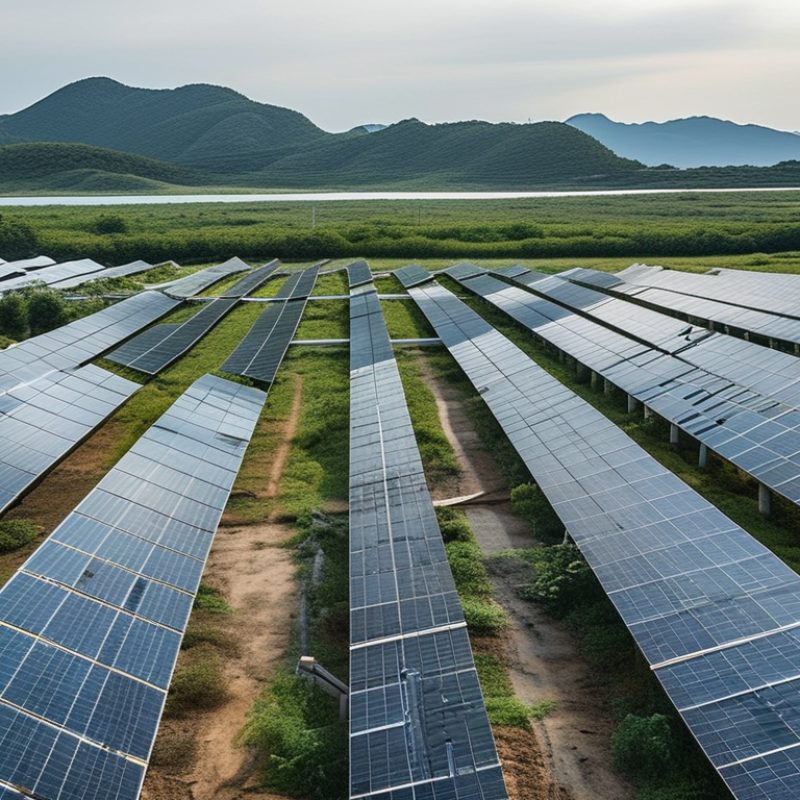
Choosing the best House Solar Power System manufacturer in China requires more than comparing catalog prices. A reliable supplier should understand your roof, climate, electricity demand, and local installation conditions. A factory may offer impressive panels, yet the inverter, battery, monitoring system, and after-sales support deserve equal attention. The complete system matters.
This guide examines how experienced buyers evaluate Chinese manufacturers. It considers production capability, quality control, product testing, certifications, warranty terms, and technical communication. Look for evidence, not impressive promises. Ask for test reports, factory details, installation references, and clear performance data. A professional manufacturer should explain panel degradation, battery temperature limits, inverter efficiency, and expected maintenance. It should also identify suitable solutions for shaded roofs, snowy regions, coastal air, or unstable grids.
Practical details reveal real expertise. Can the supplier recommend cable sizes for a long roof run? Can it explain what happens during a power outage? Does the monitoring app show daily generation clearly? These questions often expose weak support. No supplier is perfect. Even a reputable factory can experience delays, component changes, or communication gaps. That risk needs honest planning. I may overlook a promising manufacturer if I focus only on price. You may also face different standards in your country. Therefore, this article provides a careful framework for comparing manufacturers, checking documentation, and selecting a House Solar Power System that remains dependable beyond the sales contract. The best choice is not always the cheapest. It is the one supported by transparent engineering, verifiable quality, and responsive service.
A leading Chinese manufacturer combines engineering depth with consistent production control. It should design complete household systems, not simply assemble panels, batteries, and inverters. Ask for load calculations, protection settings, temperature limits, and installation drawings. Clear answers reveal real expertise. Vague promises do not.
Quality begins with traceable materials and repeatable testing. A reliable factory records cell batches, battery test results, insulation checks, and inverter performance. Independent certifications matter, but they should match the target market’s requirements. Factory audits, sample testing, and warranty procedures provide stronger evidence than polished brochures. Small details count.
After-sales capability also defines a serious supplier. Technical teams should support commissioning, fault diagnosis, firmware updates, and replacement planning. Request response times in writing. Ask how remote monitoring data is protected. A factory visit can reveal practical habits, such as organized cable storage and labeled testing stations. It can also reveal weaknesses. No manufacturer is perfect.
One useful lesson is to compare delivered performance with laboratory claims. Roof orientation, dust, shading, and seasonal weather can reduce output. A responsible manufacturer explains these limits before signing a contract. It may even recommend a smaller system when the roof cannot support more capacity. That honesty is valuable. Mistakes still happen, so documentation, spare parts, and clear escalation channels deserve equal attention.
China Best House Solar Power System Manufacturer?
How Residential Solar Power Systems Are Designed and Manufactured
A residential solar system starts with measured demand, not a catalogue panel. Designers review twelve months of bills, hourly loads, roof orientation, shading, snow, wind, and local grid rules. A 5-kilowatt array can perform very differently under two roofs. Software estimates annual yield, clipping, battery cycling, and seasonal shortfalls. IEA PVPS Trends in Photovoltaic Applications 2024 reports global PV capacity exceeded 1.4 terawatts by the end of 2023. Scale is growing fast.
Manufacturing converts that design into controlled electrical hardware. In China’s mature production base, cells are tested for power, current, visual defects, and electroluminescence cracks before stringing. Laminators seal cells, glass, encapsulant, and backsheet against moisture. Factories then flash-test modules under standard conditions and trace each serial record. Fraunhofer ISE’s Photovoltaics Report 2024 notes that commercial crystalline-silicon modules commonly exceed 20% efficiency. That figure is not a household guarantee. Temperature, dust, mismatch, and inverter losses reduce field output.
A reliable manufacturer also integrates inverter protection, battery management, mounting hardware, and monitoring. Module qualification commonly follows IEC 61215 and IEC 61730 testing. NREL’s PV Lifetime Project shows that degradation assumptions strongly influence lifetime energy forecasts. I would question any design promising identical output every day. Real roofs are rarely perfect. Factory quality matters, but installation records, commissioning tests, and after-sales data matter too. That is where many proposals remain too optimistic.
| Design or Manufacturing Dimension | Typical Residential Specification | Design Considerations | Quality and Verification Points |
|---|---|---|---|
| System Capacity | Approximately 3 kW to 15 kW for many single-family homes | Capacity is calculated from annual electricity consumption, available roof area, local solar irradiation, and the desired level of energy independence. | Engineers verify the calculated annual yield using site-specific solar data and ensure that the inverter and electrical protection devices are correctly rated. |
| Solar Modules | Monocrystalline silicon modules are commonly used, with many current residential modules rated above 400 W | Module selection depends on efficiency, dimensions, roof layout, temperature performance, mechanical load rating, and product warranty terms. | Production normally includes cell inspection, lamination, electroluminescence testing, visual inspection, and electrical performance testing. |
| Module Efficiency | Common commercial residential module efficiency is approximately 19% to 23% | Higher efficiency can increase energy production where roof space is limited, but the total system cost and available installation area must also be considered. | Flash testing measures electrical output under standardized test conditions, while electroluminescence testing helps identify hidden cell cracks and inactive areas. |
| Roof Orientation and Tilt | South-facing roofs are generally favorable in the Northern Hemisphere; practical tilt angles often range from about 15° to 40° | Actual performance depends on latitude, roof geometry, shading, local weather, and whether the mounting system is fixed or adjustable. | Site surveys should record roof direction, pitch, obstructions, structural condition, and shading from trees, chimneys, and nearby buildings. |
| Solar Inverter | String, microinverter, or hybrid inverter architecture; residential inverter sizes commonly range from about 3 kW to 15 kW | String inverters are often cost-effective for roofs with consistent orientation, while microinverters can help manage module-level shading or multiple roof orientations. | Verification includes conversion efficiency, maximum input voltage, overcurrent protection, anti-islanding behavior, grid compatibility, and enclosure protection. |
| Battery Storage | Optional lithium iron phosphate battery systems commonly provide about 5 kWh to 30 kWh of usable storage | Battery size is based on evening consumption, backup loads, electricity tariffs, required backup duration, and the permitted depth of discharge. | Testing may include battery management system operation, thermal monitoring, charge-discharge cycling, insulation resistance, and protection against overvoltage and overheating. |
| Energy Storage Configuration | DC-coupled or AC-coupled architecture with automatic battery charging and discharge control | DC coupling can reduce conversion steps in some designs, while AC coupling may be suitable for adding storage to an existing photovoltaic system. | The control system is checked for state-of-charge accuracy, emergency shutdown, grid outage response, communication reliability, and safe restart behavior. |
| Mounting Structure | Aluminum rails, stainless-steel fasteners, roof hooks, clamps, or ground-mount frames | The structure must match the roof type and withstand local wind, snow, corrosion, and temperature conditions without damaging the roof envelope. | Manufacturing checks include material quality, dimensional accuracy, fastener torque, corrosion resistance, drainage design, and mechanical load calculations. |
| Electrical Protection | DC and AC isolators, circuit breakers, surge protection devices, grounding conductors, and residual-current protection where required | Protection devices are selected according to system voltage, current, local electrical codes, grid requirements, and the installation environment. | Continuity, polarity, insulation resistance, grounding, protective-device operation, and cable routing are tested before commissioning. |
| Panel Manufacturing Process | Cell interconnection, layup, lamination, framing, junction-box installation, curing, inspection, and final electrical testing | Consistent temperature, pressure, material handling, and process control help reduce cell damage, delamination, moisture ingress, and output variation. | Typical controls include incoming-material inspection, automated optical inspection, electroluminescence imaging, insulation testing, and final power measurement. |
| Module Encapsulation | Glass, encapsulant, solar cells, encapsulant, and rear protection layer assembled into a laminated module | Encapsulant selection and lamination parameters influence resistance to moisture, ultraviolet exposure, thermal cycling, and potential-induced degradation. | Quality checks assess bubbles, wrinkles, edge seals, adhesion, dimensional tolerance, and visible defects after lamination. |
| Weather Resistance | Outdoor components are designed for long-term exposure to sunlight, rain, humidity, wind, and temperature changes | Material selection should reflect the installation climate, including coastal salt exposure, high humidity, snow, dust, or extreme temperature. | Relevant evaluations can include damp-heat, thermal-cycle, humidity-freeze, ultraviolet, mechanical-load, and water-ingress testing. |
| Grid Connection | Grid-tied systems synchronize with the local utility network and stop exporting power during a grid outage unless backup operation is supported | Interconnection requirements differ by country and utility, including voltage range, frequency range, export limits, and application procedures. | Commissioning verifies voltage, frequency, phase sequence, anti-islanding response, export control, and compliance with applicable electrical standards. |
| Energy Yield | Annual production varies significantly by location; a broad planning estimate may range from roughly 800 to 1,800 kWh per installed kW per year | Solar resource, orientation, tilt, shading, temperature, system losses, dust, and equipment availability all affect actual output. | Monitoring software compares measured production with expected yield and can identify underperformance, communication faults, or abnormal string behavior. |
| System Losses | Typical losses may include inverter conversion, wiring, mismatch, temperature, soiling, shading, and availability losses | Designers reduce losses through correct cable sizing, low-shading layouts, suitable string design, ventilation, and regular maintenance. | Performance verification uses inverter data, irradiance measurements where available, thermal inspection, and comparison with modeled production. |
| Monitoring and Communication | Web or mobile monitoring may display generation, consumption, battery state of charge, grid exchange, and fault alerts | Monitoring design should provide secure communication, reliable data storage, user access control, and continued operation during temporary network interruptions. | Factory and installation checks confirm sensor calibration, data accuracy, firmware version, communication stability, and alarm notification functions. |
| Installation and Commissioning | Includes site inspection, mounting, module installation, cable routing, inverter setup, protection testing, and customer handover | Installation duration depends on roof access, system size, weather, permitting, electrical upgrades, and whether battery storage is included. | Final documentation should include single-line diagrams, equipment records, test results, operating instructions, and emergency shutdown information. |
| Maintenance Requirements | Periodic visual inspection, monitoring review, cable and connector inspection, and cleaning when soiling materially reduces output | Maintenance frequency depends on dust, pollen, rainfall, snow, wildlife, roof access, and local environmental conditions. | Maintenance records should track production trends, alarms, physical damage, corrosion, loose connections, and any corrective actions. |
| Expected Service Life | Solar modules are commonly designed for service periods exceeding 25 years; inverters and batteries may require replacement sooner | Actual service life depends on climate, operating temperature, installation quality, maintenance, cycling profile, and component design. | Long-term reliability is supported by controlled manufacturing, traceable materials, accelerated testing, and documented quality-management procedures. |
| Safety and Compliance | Systems should follow applicable national and local photovoltaic, electrical, building, fire, and grid-interconnection requirements | Requirements vary by jurisdiction, so system design should be reviewed by qualified electrical and structural professionals where required. | Compliance evidence may include product test reports, factory quality records, installation inspection results, and utility approval documents. |

A reliable Chinese home solar system begins with properly selected photovoltaic modules. Monocrystalline cells usually offer strong efficiency on limited rooftops. Their aluminum frames need careful inspection for corrosion and mechanical strength. Small cracks can reduce output over time.
The inverter converts direct current into usable household electricity. Hybrid inverters can also manage batteries and grid power. Look for clear safety protections, including overvoltage, overheating, and ground-fault detection. Battery systems commonly use lithium iron phosphate cells because they provide stable cycling and strong thermal safety. A home battery may store afternoon energy for evening cooking, lighting, and water heating.
Mounting structures matter more than many buyers expect. Roof angles, wind exposure, drainage, and local building conditions affect long-term performance. Monitoring software can display daily generation, battery status, and unusual losses. Yet software readings are not always perfect. A technician should compare them with meter data during commissioning.
Good installation depends on cable routing, connector quality, ventilation, and documented testing. Certified equipment and qualified installers help support compliance with electrical and grid requirements. In practice, shading from a chimney or nearby tree may reduce production sharply. I would leave room for future maintenance, even when the initial design appears efficient. Proper inspections remain essential after heavy rain, strong winds, or unusual system alarms.
China Best House Solar Power System Manufacturer?
How to Evaluate a Chinese Residential Solar Power Manufacturer
A reliable manufacturer should demonstrate engineering depth, not only competitive pricing. IRENA reported 473 GW of renewable capacity additions in 2023, with solar contributing 346 GW. This rapid expansion increases supplier choice, but also makes verification essential. Request factory audit records, production traceability, and independent test reports for panels, inverters, batteries, and protection devices. Check compliance with relevant IEC standards, including IEC 61215 and IEC 61730 for photovoltaic modules. Certification is useful, but it is not proof of long-term field performance.
Tips: Ask for three years of failure-rate data, not only efficiency figures. Verify whether warranty terms cover labor, replacement shipping, and battery capacity loss. A manufacturer should provide clear testing procedures, serial-number tracking, and technical support in your market. The International Energy Agency’s Renewables 2024 report highlights continued growth in distributed solar, making after-sales service increasingly important for household systems.
Evaluate the complete system, not a single component. Compare temperature coefficients, inverter conversion efficiency, battery cycle conditions, monitoring functions, and emergency shutdown design. Ask how the system performs during heat, dust, humidity, and unstable grids. A site-specific simulation is more credible than a generic annual-yield promise. Review audited financial information where available, because a long warranty is weak if the supplier cannot support it later. I would also inspect sample units before mass production. It costs time. It can prevent an expensive mistake. One limitation remains: factory documents may describe ideal conditions, while real rooftops are rarely ideal.
China Best House Solar Power System Manufacturer?
Choosing a house solar power system manufacturer requires more than comparing panel prices. Installation quality affects safety, output, and equipment life. A qualified installer should assess roof direction, shading, cable routes, and local weather loads. They should provide a clear design before work begins. Details matter. Ask who performs electrical testing and who handles permits.
Certification must match the destination market and each installed component. Request current test reports, conformity documents, and safety records, rather than accepting vague claims. A reliable manufacturer explains applicable standards for inverters, batteries, mounting structures, and protection devices. Documents should show model numbers and testing dates. Paperwork matters. However, certification alone cannot prove good field workmanship.
Warranty terms deserve careful reading. Check coverage periods, exclusions, labor responsibility, and replacement procedures. Some warranties cover parts but exclude transportation or installation costs. That difference can become expensive. After-sales support should include remote monitoring, fault diagnosis, spare-parts access, and a defined response time. Ask whether technical staff can support your language and time zone. A practical service agreement should state who visits the site when remote repair fails.
A strong supplier also shares maintenance guidance, inspection intervals, and emergency procedures. Still, no system is completely maintenance-free. Dust, loose connections, and software faults can appear. A small weakness remains: many buyers focus on purchase price and overlook service distance. That choice may save money initially, but it can delay repairs when household power matters most.
© 2025 Cardboard Tubes | Registered in England and Wales.
Company Number 2402078