How to Choose the Best L6e Quadricycle for Global Buyers?

Choosing the best L6e Quadricycle requires more than comparing prices and attractive photographs. Global buyers should examine real operating conditions, service support, and local registration requirements. An L6e model normally suits low-speed urban travel, with a maximum speed near 45 km/h. That limit changes the buying decision completely.

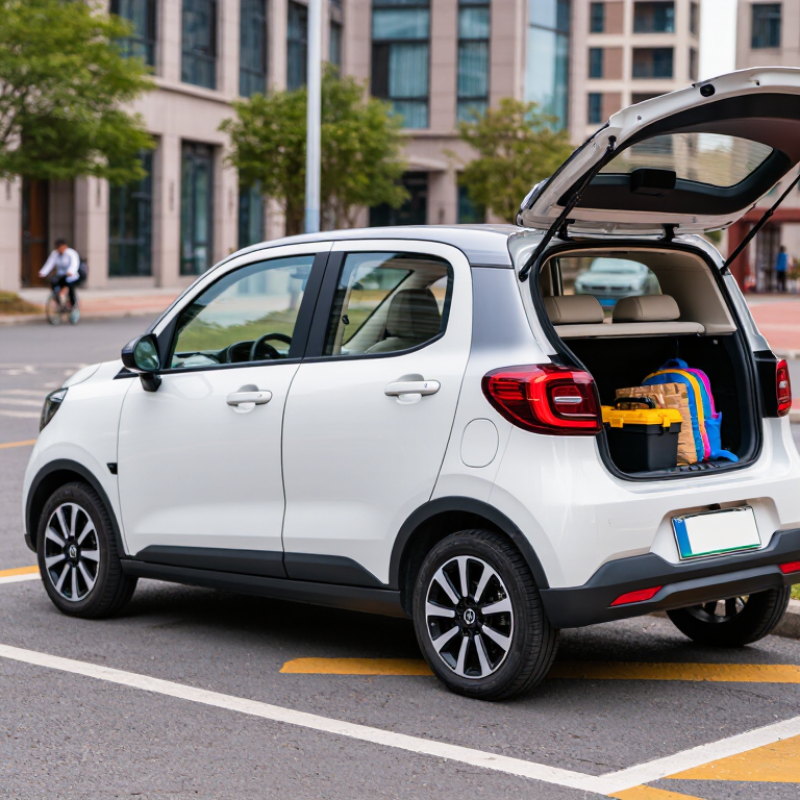
Wim Ouboter, founder of Microlino, described this vehicle concept as “a mix between a motorcycle and a car.” His observation is useful because an L6e Quadricycle needs both qualities. It should offer weather protection, simple controls, and practical storage. It should also remain narrow enough for crowded streets and compact parking spaces. A buyer should measure the cabin, not only trust brochure photographs. A small boot may look sufficient until it holds groceries, tools, or a child’s school bag.

Battery capacity deserves careful attention. A claimed range may decrease in cold weather, heavy rain, or steep neighborhoods. Check charging time, battery warranty, replacement cost, and plug compatibility before ordering. Test the seat position and visibility, especially for older drivers. Ask whether authorized technicians operate near your destination. This detail is often overlooked. It should not be.

Reliable selection also requires evidence. Compare independent road tests, warranty terms, crash equipment, lighting, and tire availability. Confirm the vehicle’s classification with the relevant local authority before purchase. Rules can differ between countries and even regions. A model suitable for one city may face different registration or road-access conditions elsewhere. No single L6e Quadricycle is perfect. The best choice balances safety, usability, climate resistance, maintenance access, and honest expectations.

How to Choose the Best L6e Quadricycle for Global Buyers?

Understanding L6e Quadricycle Classification and Global Market Standards

L6e quadricycles occupy a specific category within Europe’s L-category vehicle system. They are generally limited to 45 km/h, with power capped at 6 kW. Their mass limit is also restricted, with electric battery weight treated under specific regulatory rules. These limits distinguish L6e vehicles from faster or heavier quadricycles.

Classification is not identical worldwide. Some markets follow European technical definitions, while others apply local rules for low-speed vehicles, compact cars, or electric mobility products. Buyers should verify speed limits, permitted roads, registration duties, driving-license requirements, and insurance conditions before ordering. A vehicle accepted as L6e in one country may need additional testing elsewhere.

Look closely at the conformity documents. Check the vehicle identification number, rated power, braking performance, lighting, mirrors, seat belts, electromagnetic compatibility, and battery safety records. The stated range should also be tested under realistic conditions, including cold weather, hills, passenger weight, and heating use. Range claims can look precise but remain variable.

Do not rely on photographs alone. Inspect door locks, tire markings, charging equipment, corrosion protection, and service access. I have found that small documentation gaps can create larger import delays than mechanical problems. That lesson is easy to overlook.

A reliable supplier should provide traceable test reports and clear after-sales procedures. Ask who handles software updates, spare parts, warranty claims, and local compliance changes. Global standards are useful, but they are not interchangeable. Local verification still matters.

Defining Daily Mobility Needs, Driving Conditions, and User Requirements

How to Choose the Best L6e Quadricycle for Global Buyers?

Choosing an L6e quadricycle starts with daily mobility, not appearance. Measure the real journey: school runs, local shopping, work commutes, and tight parking spaces. An L6e vehicle typically suits short urban trips, with a limited speed and compact dimensions. It may feel insufficient on fast roads. That is an important weakness, not a detail to hide.

Driving conditions matter just as much. Flat streets need different performance from steep lanes, loose surfaces, or heavy rain. Check ground clearance, braking performance, cabin sealing, lighting, and battery protection. The IEA’s Global EV Outlook 2024 reported nearly 14 million electric car sales in 2023. This growth supports wider charging access, but infrastructure remains uneven across regions. A buyer should confirm home charging, public connector availability, and local electricity reliability.

Tips: Create a seven-day route diary before comparing models. Record distance, passengers, luggage, hills, weather, and parking width. Give extra attention to seat access and visibility for older users. Review independent safety information, warranty terms, service coverage, and replacement-part timelines. The OECD International Transport Forum highlights the importance of safe, accessible, and efficient urban mobility. Still, reports cannot replace a supervised test drive. A perfect match is rare. Your quiet neighborhood may reveal problems that a showroom hides.

How to Choose the Best L6e Quadricycle for Global Buyers? — Defining Daily Mobility Needs, Driving Conditions, and User Requirements

Buyer Profile / Daily Need Typical Driving Environment Recommended Operating Range Useful Vehicle Configuration Battery and Charging Considerations Important Performance Requirements Selection Priorities
Urban Commuter Dense city streets, short trips, traffic restrictions, frequent stops, and limited parking. 20–50 km per day; mostly paved roads with average speeds below the vehicle limit. Compact two-seat layout, short turning radius, easy-access doors, good visibility, and enclosed weather protection. Approximately 5–10 kWh battery capacity is commonly suitable for short daily travel. Standard household AC charging may require about 4–8 hours, depending on battery size and charger output. European L6e vehicles are generally limited to a maximum design speed of 45 km/h. Smooth acceleration, predictable braking, and low-speed maneuverability are more important than high power. Compact sizeLow energy useEasy parkingVisibility
Suburban Household Residential roads, urban arterials, school runs, shopping areas, and moderate hills. 35–70 km per day with several passengers or frequent stops. Two comfortable seats, larger storage area, adjustable seating, practical heating or ventilation, and stronger suspension. Choose enough usable battery capacity for the daily route plus a reserve of approximately 20–30%, especially where public charging is limited. Hill-start capability, stable handling, dependable demisting, effective lighting, and a clearly visible state-of-charge display. Passenger comfortStorageHill performanceClimate control
Campus, Resort, or Private Community Private roads, campuses, resorts, gated communities, industrial parks, and pedestrian-sensitive areas. 10–40 km per day with repeated low-speed journeys. Open or semi-enclosed body options may be practical where permitted; prioritize easy entry, strong bumpers, and simple controls. A smaller battery can be sufficient when the vehicle returns to a fixed charging point each day. Scheduled overnight charging can reduce operational complexity. Low-speed control, compact dimensions, tight turning radius, durable body panels, and reliable operation over repeated short cycles. DurabilityEasy accessFleet chargingLow maintenance
Local Delivery or Service User Urban delivery routes, municipal service areas, business districts, and narrow streets. 40–100 km per day, depending on payload, route density, and traffic conditions. Single-seat or two-seat cargo configuration, lockable load compartment, flat floor, reinforced suspension, and easy-clean interior. Allow for additional energy consumption caused by payload, frequent acceleration, and stop-start operation. Overnight charging is suitable for predictable routes; a higher-output AC charger can shorten downtime. Payload capacity must be checked against the vehicle’s legal maximum mass. Prioritize braking performance, load security, rear visibility, and battery thermal protection. PayloadLoad accessRoute efficiencyServiceability
Hilly or Mountainous Area Steep streets, winding roads, frequent elevation changes, and variable surface quality. 15–60 km per day; actual range can decrease on steep gradients and in cold weather. Enclosed body, robust suspension, high-grip tires suitable for local regulations, and a powertrain calibrated for controlled hill starts. Specify a practical reserve because climbing consumes more energy. Regenerative braking can help recover some energy on descents but should not replace mechanical braking. Gradeability, traction, braking stability, cooling performance, and controlled downhill speed are key requirements. TorqueTractionBrakingThermal management
Cold or Wet Climate Low temperatures, rain, snow-prone periods, strong wind, and seasonal road contamination. Plan for a lower usable range than laboratory or mild-weather figures; heating, cold batteries, and wet roads increase energy consumption. Fully enclosed cabin, effective windscreen demisting, heated seating or efficient cabin heating, sealed electrical connectors, and corrosion-resistant components. Confirm whether the battery has thermal management and whether charging is permitted at low temperatures. Keep the vehicle connected when recommended by the manufacturer. Cold-weather starting, defrosting performance, tire grip, water protection, lighting, and battery pre-conditioning capability. Weather protectionDefrostingBattery careCorrosion resistance
Warm or Tropical Climate High ambient temperatures, intense sunlight, humidity, heavy rain, and frequent air-conditioning use. Range may decline when cooling systems operate continuously or when the vehicle is heavily loaded. Efficient ventilation or air conditioning, UV-resistant interior materials, shaded dashboard surfaces, sealed electronics, and effective drainage. Verify battery temperature limits, charging protection, and cooling capacity. Avoid leaving the vehicle or battery in direct sun for extended periods where possible. Thermal management, electrical insulation, wet-weather braking, cabin ventilation, and resistance to humidity. CoolingHumidity protectionUV resistanceWater management
Long Daily Utilization Multiple daily trips with limited time available for charging between journeys. 60–100 km per day or several consecutive operating cycles. Higher usable battery capacity, energy-efficient accessories, comfortable seating, durable tires, and a clear remaining-range display. Compare usable rather than nominal battery capacity. Confirm charge time, connector type, charging efficiency, and access to compatible electrical supply. Consistent performance at different battery states, low auxiliary energy consumption, dependable braking, and simple maintenance procedures. Usable rangeCharge timeReliabilityEnergy efficiency
Occasional or Seasonal User Weekend travel, vacation properties, secondary transport, and low annual mileage. 5–30 km per outing with long periods between uses. Simple controls, durable interior, corrosion protection, secure parking compatibility, and low standby energy consumption. Check long-term storage procedures, battery warranty conditions, recommended state of charge during storage, and protection against deep discharge. Ease of restart after inactivity, tire condition monitoring, dependable 12-volt systems, and accessible service support. Storage careWarrantyLow upkeepReliability
Accessibility-Focused User Urban and residential travel requiring easy entry, clear controls, and stable low-speed handling. 10–50 km per day, depending on personal mobility needs and trip frequency. Wide door opening, low step-in height, supportive seat, large control markings, adjustable mirrors, and adequate interior turning space. Place the charging port where it can be reached safely. Confirm cable weight, connector accessibility, and charging-point height before purchase. Visibility, steering effort, brake-pedal feel, parking assistance, cabin ergonomics, and compatibility with permitted mobility aids. Easy entryErgonomicsVisibilityControl simplicity
Global Compliance and Import Buyer Cross-border purchase, local registration, import procedures, and markets with different vehicle classifications. Determined by local road network, legal speed limits, climate, and charging infrastructure. Configuration must match local requirements for lighting, mirrors, seat belts, brakes, tires, vehicle identification, and occupant capacity. Confirm voltage compatibility, charging connector standards, battery transport documentation, and local electrical safety requirements. Verify the applicable quadricycle category before purchase. In the European L6e framework, light quadricycles generally have a maximum design speed of 45 km/h, subject to specific subcategory rules. HomologationRegistrationParts supplyAfter-sales support

Comparing Powertrains, Range, Safety Features, and Passenger Capacity

Choosing the best L6e quadricycle starts with the powertrain, not exterior styling. Battery-electric models offer quiet travel and low maintenance. They suit short urban trips with regular charging access. Combustion-powered models may refuel faster, but they can produce more noise and require routine engine servicing. In practical evaluations, real range often falls below advertised figures. Ask for tested range with passengers, luggage, lights, and heating switched on. Cold weather can reduce battery performance noticeably. Do not trust one number.

Safety deserves careful, evidence-based attention. Check for three-point belts, strong cabin construction, head restraints, reliable lighting, and clear visibility. Parking sensors can help in narrow streets, but they cannot replace careful driving. Some vehicles include electronic stability or anti-lock braking systems, while others do not. Confirm the actual equipment list. Crash-test information may be limited for this category, so avoid assuming a small cabin is automatically protective.

Passenger capacity also changes daily usefulness. A two-seat layout may provide better legroom and luggage space. A four-seat layout can serve families, but rear passengers may face tighter access and reduced storage. Sit in every seat before buying. Measure the door opening. Check whether a folded stroller or grocery crate fits behind the seats. I once overvalued compact dimensions and underestimated charging access. That mistake matters in apartment parking areas. Global buyers should also verify local registration, charging compatibility, service support, and permitted passenger capacity before payment.

Checking Legal Compliance, Import Rules, and Regional Road Regulations

How to Choose the Best L6e Quadricycle for Global Buyers?

Checking Legal Compliance, Import Rules, and Regional Road Regulations

Choosing an L6e quadricycle requires more than comparing speed, range, and cabin design. In the European Union, L6e classification usually covers light quadricycles with limited power and speed. Other markets may use different categories. Always confirm the vehicle’s classification with the transport authority in the destination country. A neat specification sheet can still mislead.

Check the certificate of conformity, vehicle identification number, safety equipment, and emissions or battery documents. Import rules may require customs declarations, duties, inspections, and translated paperwork. Some regions also demand pre-registration approval before shipment. Road rules can vary between neighboring areas. Confirm minimum driver age, license requirements, insurance, helmet use, lighting, parking, and access to restricted roads. Electric models may need extra battery transport documents.

Tips: Ask the seller for complete compliance files before paying. Contact customs and the local registration office directly. Keep written confirmation. Rules change, unfortunately. Do not rely only on online listings or verbal promises. A useful checklist should include destination, vehicle class, import tax, registration steps, and after-sales support. I have found that buyers often focus on delivery price and overlook inspection fees. That mistake can make a seemingly affordable vehicle expensive. Leave time for unexpected paperwork, because real import processes rarely follow a perfect schedule.

Evaluating Total Cost, Supplier Reliability, Service, and Parts Support

How to Choose the Best L6e Quadricycle for Global Buyers?

A practical evaluation should begin with total cost, not the showroom price. Include batteries, freight, import duties, insurance, charging equipment, maintenance, and resale risk. The IEA’s Global EV Outlook 2024 reports that battery pack prices fell by 14% in 2023. However, cheaper batteries do not guarantee cheaper ownership. Warranty limits, replacement procedures, and local technician rates can change the calculation quickly.

Supplier reliability needs measurable evidence. Ask for production records, quality-control procedures, delivery performance, and battery traceability. The World Bank’s Logistics Performance Index 2023 compares 139 economies through customs, infrastructure, logistics competence, tracking, and timeliness. It cannot prove one supplier is dependable. It can reveal market-level delivery challenges. Service support matters more after the first sale. ACEA data shows that passenger vehicles in Europe remain on the road for over 12 years on average. Buyers should therefore request parts availability for several years, repair manuals, diagnostic access, and response-time commitments. A low price with unavailable controllers is not a saving.

Tips: Build a five-year cost worksheet. Request three recent customer references. Test one vehicle in local conditions before placing a large order. Check whether common parts, such as brake pads, lamps, tires, and charging units, have local alternatives. Do not trust attractive promises alone. I have seen specifications look complete while service responsibilities remained unclear. That uncomfortable gap deserves attention.

How to Choose the Best L6e Quadricycle for Global Buyers?

Five-year ownership cost comparison for a typical electric L6e quadricycle, excluding taxes, insurance, financing, and registration. Figures are planning estimates in euros based on 10,000 km per year.

Buyer insight: Purchase price is usually the largest cost, but energy, routine service, and parts availability can materially change total ownership cost. Buyers should confirm battery warranty, local repair capability, delivery lead times, and a multi-year parts supply commitment before selecting a supplier.

© 2025 Cardboard Tubes | Registered in England and Wales.
Company Number 2402078