How to Choose Disposable Plastic Cups for Global Sourcing?
Choosing Disposable Plastic Cups for global sourcing requires more than comparing prices on a supplier spreadsheet. Material grade, cup volume, wall strength, printing quality, and shipment reliability can change the real purchasing cost. A 16-ounce cup may look competitive at quotation stage, yet weak rims can increase leakage, waste, and customer complaints. Small details matter.
Industry data shows why responsible selection is becoming more important. PlasticsEurope reported approximately 400.3 million tonnes of global plastic production in 2022. The OECD’s Global Plastics Outlook found that plastic waste reached 353 million tonnes in 2019, with packaging representing the largest waste category. These figures place disposable foodservice products under growing scrutiny. UNEP’s 2023 report, Turning off the Tap, also identified reusable systems, better product design, and improved waste management as important routes for reducing plastic pollution.
For buyers, the practical question is not simply, “Which cup is cheapest?” It is, “Which cup performs reliably across markets?” Suppliers should provide resin specifications, food-contact documentation, test results, factory certifications, and clear carton details. Buyers should also confirm compliance requirements for destination countries before placing orders. Requirements may differ for recycled content, labeling, additives, and packaging disposal.
A careful sourcing process should compare landed cost, not only unit cost. It should review sample performance under heat, stacking pressure, and transport vibration. The process is rarely perfect. Supplier documents may be incomplete, and product samples may not represent mass production. That uncertainty deserves attention. Stronger supplier audits, independent testing, and written specifications can reduce avoidable risk while supporting consistent quality and more credible purchasing decisions.
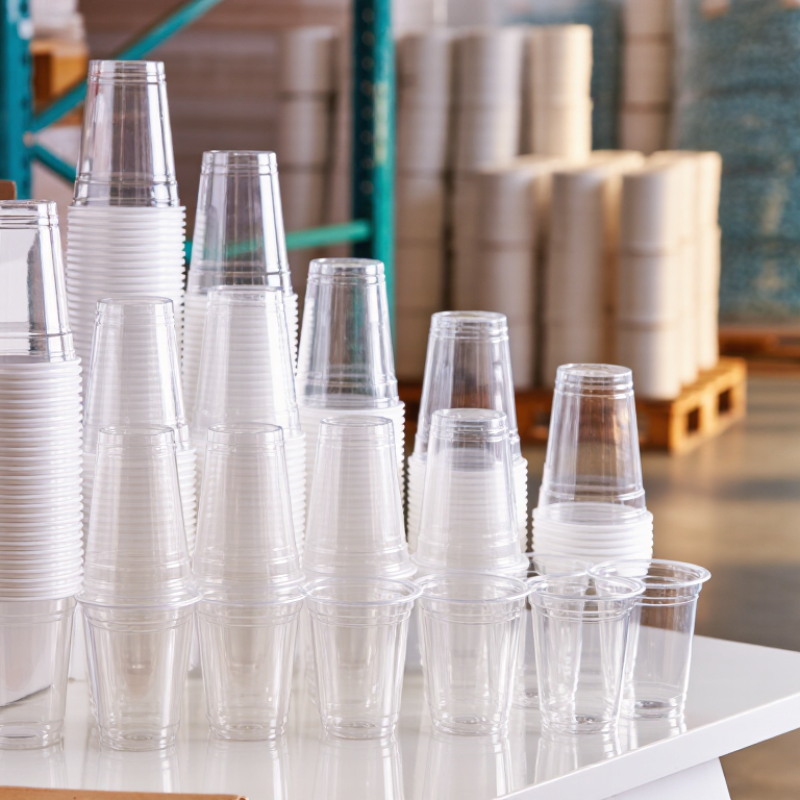
Define Your Disposable Plastic Cup Sourcing Requirements
Define Your Disposable Plastic Cup Sourcing Requirements
A reliable sourcing project starts with a precise cup specification, not a supplier quotation. Define the intended use first. Cold drinks, desserts, sampling, and takeaway service require different designs. Record the volume in milliliters, top diameter, height, rim style, and wall thickness. A 500 ml cup may look suitable, yet its usable capacity can vary significantly.
Material selection needs practical attention. Specify the required plastic type, clarity, stiffness, temperature range, and food-contact suitability. Ask for test reports that match the actual production material. Do not rely on general certificates alone. Check whether the cup resists cracking during stacking, transport, and filling. Small details matter. A weak rim can cause leakage complaints.
Packaging requirements should be measurable. Set the quantity per sleeve, cartons per pallet, carton dimensions, and maximum acceptable damage rate. Confirm printing, labeling, and recycling information according to the destination market. Request samples from mass production, not only polished development samples. This is often overlooked. It should not be.
Build a quality plan before placing an order. Define inspection points for dimensions, weight, appearance, odor, sealing, and carton condition. Agree on acceptable tolerance levels in writing. Leave room for review, because an ideal specification may increase cost or reduce packing efficiency. A useful requirement is specific, testable, and realistic for regular global shipments.
Evaluate Suppliers, Product Quality, and Manufacturing Standards
How to Choose Disposable Plastic Cups for Global Sourcing?
Supplier evaluation should begin with evidence, not attractive catalog photos. Request the factory’s legal registration, production address, capacity details, and recent quality records. A video call can reveal useful details, such as dusty storage areas or unmarked resin bags. However, a polished factory tour proves little by itself. Independent audits can provide stronger evidence.
Order samples from the same production line used for mass manufacturing. Check rim smoothness, wall thickness, stacking stability, clarity, and leakage after filling. Measure several cups with calipers because one sample may hide variation. Test the cups with cold drinks, warm liquids, and ordinary handling pressure. Ask for food-contact declarations and relevant migration test reports for the target market. Standards differ across regions, so documents must match the destination country.
Manufacturing controls matter as much as the final product. Review incoming material checks, mold maintenance, temperature control, and batch traceability. A reliable supplier should explain how defects are isolated and corrected. Specify acceptable limits for cracks, black spots, deformation, and uneven rims. Small defects become expensive during large shipments.
I have seen buyers focus too heavily on unit price. That decision often creates higher inspection and replacement costs. A perfect checklist does not exist. Supplier communication can still fail during busy seasons. Build inspection points into the purchase agreement, and keep a retained sample from every approved batch. Recheck assumptions when the cup design, material, or shipping route changes.
How to Choose Disposable Plastic Cups for Global Sourcing
Material density is a practical screening factor when comparing disposable cup plastics. The ranges below show approximate densities for commonly used resins and can help buyers assess material selection, transport weight, and recycling considerations.
Sourcing note: Density alone does not confirm product quality. Request food-contact compliance documentation, resin identification, wall-thickness specifications, migration-test results, batch traceability, and manufacturing-system certifications such as ISO 9001. Verify that the applicable requirements match the destination market.
Check Food Safety, Sustainability, and Import Compliance
Choosing disposable plastic cups for global sourcing requires more than comparing unit prices. Food safety comes first. Ask suppliers for material specifications, migration-test reports, and declarations of compliance for the destination market. Check the cup, colorants, inks, lids, and additives separately. Rules such as EU Regulation (EC) No 1935/2004 and applicable U.S. FDA food-contact requirements may differ. A cup approved for one market may fail another.
Sustainability needs measurable evidence, not green wording. The OECD’s Global Plastics Outlook reports that global plastic waste reached 353 million tonnes in 2019, while only 9% was recycled. Request recycled-content verification, manufacturing energy data, and credible end-of-life information. Also examine wall thickness and transport efficiency. A lighter cup may reduce material use, but poor performance can increase waste. That trade-off deserves testing.
Import compliance is often overlooked. Confirm the correct tariff classification, commercial invoice details, country-of-origin marking, packaging labels, and destination-specific producer-responsibility obligations. Keep batch numbers and test records for traceability. During sample checks, inspect rim smoothness, odor, leakage, deformation, and stacking strength. Do not rely only on a supplier’s certificate; verify its scope, date, and testing laboratory. Some documents look complete but answer the wrong question. A lower price can become expensive after customs delays, rejected shipments, or disposal costs.
Calculate Costs, Logistics, and Order Quantities for Global Purchasing
How to Choose Disposable Plastic Cups for Global Sourcing?
Global purchasing starts with the delivered cost, not the factory price. Calculate the cup price, tooling, packaging, inland transport, freight, insurance, duties, and destination handling fees. A cup priced at $0.03 can become twice as expensive after shipping and import charges. Request a detailed quotation with currency, payment terms, delivery basis, and validity period.
Order quantity should match forecasted sales, storage space, and cash flow. Compare full-container loading with mixed or smaller shipments. Larger orders may reduce unit freight costs, but they can create slow-moving inventory. A practical calculation uses monthly demand, lead time, safety stock, and carton capacity. Include a few weeks of protection for port delays. Not too much.
Logistics details deserve close attention. Confirm cup dimensions, nesting quantity, carton strength, pallet configuration, and moisture protection before production. Ask for food-contact test reports and material specifications relevant to the destination market. These documents support reliable purchasing decisions and reduce clearance risks. Samples should be checked for rim smoothness, leakage, stacking stability, and actual volume.
My first cost estimate would still be incomplete without damage rates and warehouse labor. That is the uncomfortable part. Recalculate landed cost after receiving the first shipment, then compare it with the quotation. Small differences in carton size or freight rates can change the order quantity. A simple spreadsheet helps, but supplier data must be verified regularly.
How to Choose Disposable Plastic Cups for Global Sourcing? - Calculate Costs, Logistics, and Order Quantities for Global Purchasing
Planning assumptions: Costs are indicative USD estimates for international purchasing and exclude VAT, customs brokerage, inland delivery, inspection, tooling, printing plates, payment fees, and storage. The logistics model assumes a 40-foot high-cube container with approximately 60 m³ of practical loading capacity, ocean freight of about $2,400 per container, and destination handling charges of about $1,000 per container. Estimated landed cost is calculated as FOB unit cost + allocated ocean freight + 6.5% import duty on the customs value + allocated local charges. Confirm final specifications, tariff classification, sustainability claims, food-contact compliance, and shipping quotations before placing an order.