

Top Automatic Stacker Manufacturers in China

Automatic Stackers are becoming essential in warehouses where every square meter matters. They lift, transfer, and organize loads with less manual handling. For manufacturers, the challenge is not simply building a machine that moves pallets. It is creating equipment that fits real workflows, floor conditions, load sizes, and safety requirements.

Market data helps explain the growing attention. The China Federation of Logistics and Purchasing reported that China’s total social logistics value reached 352.4 trillion yuan in 2023, up 5.2% year over year. That scale creates pressure to move goods reliably through busy facilities. Meanwhile, Grand View Research estimated the global warehouse automation market at about US$21.7 billion in 2023 and forecast continued growth through 2030. These figures describe broad logistics and automation trends, not automatic stacker sales alone. That distinction matters.

This guide to Top Automatic Stacker Manufacturers in China looks beyond product claims. It considers lifting capacity, stacking height, control systems, customization, service coverage, and practical integration needs. A compact unit beside a production line may solve a different problem than a high-throughput system serving a distribution center. Buyers should also check how manufacturers document testing and support equipment after installation. Rankings cannot replace that work. No supplier is right for every site, and published specifications do not always reveal how a machine performs during a crowded shift. The comparison that follows is a starting point, not a verdict.
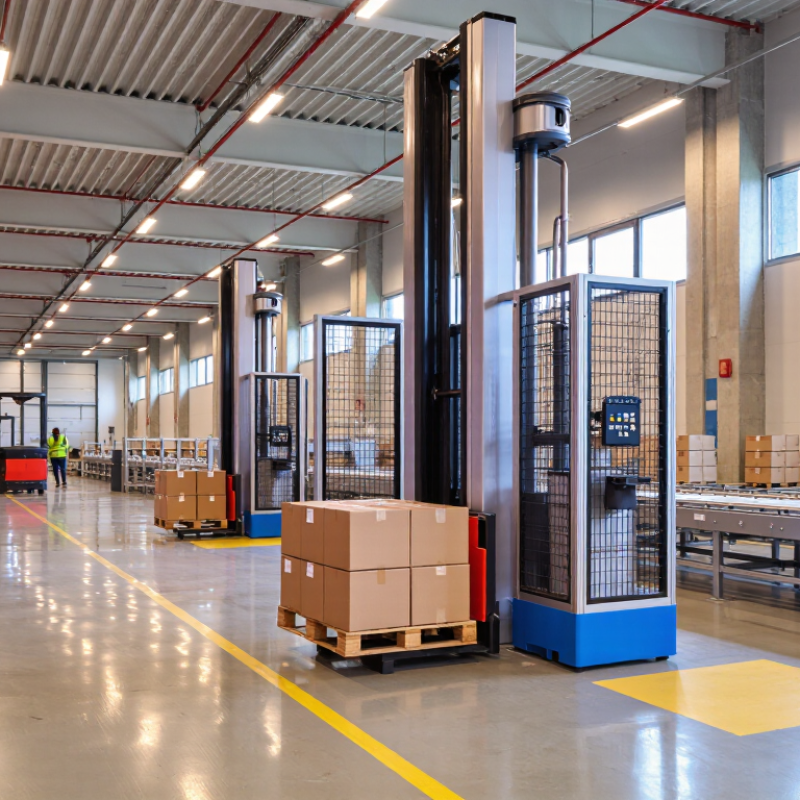
Top Automatic Stacker Manufacturers in China

What Automatic Stackers Are and Where They Are Used

An automatic stacker moves and places loads with limited manual handling. Depending on its design, it may lift pallets, stack cartons, or store loads in high-bay racking. Sensors, controls, and programmed routes guide each movement. Some systems work beside conveyors; others travel through warehouse aisles. The term can describe different equipment, so buyers should confirm the machine’s actual function.

These systems are used in distribution centers, production plants, and packaging areas where loads need repeatable handling. A stacker can move a pallet from a conveyor to a storage position, or build stable carton layers for dispatch. That matters. Reliable stacking can reduce repetitive lifting, but poor load alignment or unsuitable floor conditions still cause problems. Site assessment is essential.

The broader automation trend offers useful context, but not a direct measure of stacker demand. The International Federation of Robotics’ World Robotics 2024 report records 541,302 industrial robots installed worldwide in 2023. That figure covers industrial robots, not automatic stackers specifically. It signals growing investment in automation, while leaving a practical question: will a stacker fit the facility’s load sizes, aisle width, and operating rhythm? These details are easy to underestimate.

Automatic Stackers: Common Pallet Footprints

Automatic stackers lift, position, and stack loads in warehouses, manufacturing facilities, and distribution centers. Pallet size is one practical factor when configuring equipment and material-handling workflows.

Bars show nominal pallet footprint area, calculated from commonly used dimensions. Actual pallet specifications and equipment requirements can vary by facility and application.

Main Types and Operating Principles of Automatic Stackers

Automatic stackers generally use either a lifting platform, a gantry mechanism, or a robotic arm to arrange products into stable loads. In a platform stacker, a conveyor feeds cartons or bags onto a lift table. Sensors detect each item, while guides keep its position consistent. As layers build, the platform lowers to maintain a workable loading height. Simple, but sensitive to uneven products.

Gantry stackers move a gripping head along overhead rails. They suit sheets, boards, and other flat materials that need careful alignment. Robotic stackers use programmed movements and suitable grippers to place varied items onto pallets. Their flexibility helps with changing patterns, though setup and safety checks require attention. Small details matter.

Across these types, the control system coordinates conveyors, sensors, motors, and stops. Photoelectric sensors can confirm that a product has reached the pickup point; load sensors may monitor platform weight. Operators typically set layer patterns and check that the pallet is square before the cycle runs. Real products are rarely perfect. A crushed carton or warped sheet can disrupt a neat pattern, so inspection and occasional adjustment remain part of reliable operation.

Top Automatic Stacker Manufacturers in China - Main Types and Operating Principles of Automatic Stackers

Automatic Stacker Type Typical Loads Operating Principle Typical Operating Sequence Main Advantages Key Selection Considerations
Layer Palletizer Cartons, cases, trays, and other uniform packages arranged in layers. Products are grouped into a layer, aligned, and transferred onto a pallet by a sweep plate, transfer platform, or layer-handling mechanism. Products enter on a conveyor; a pattern-forming section arranges them; each completed layer is placed on the pallet until the required stack height is reached. Suitable for high-throughput lines with consistent products and repeatable pallet patterns. Check package dimensions, layer pattern, pallet size, required rate, and whether slip sheets or layer pads are needed.
Conventional High-Level Palletizer Cases and bags that can be conveyed and formed into stable layers. Products are elevated to a higher-level layer-forming area, arranged into a pattern, and deposited onto a pallet below. Infeed conveyors deliver products; a forming area builds the layer; the layer is transferred to the pallet, and the pallet is lowered as the stack grows. Can handle multiple product lanes and is commonly used for continuous production lines. Requires sufficient building height and floor space; assess product stability, changeover needs, and conveyor layout.
Low-Level Palletizer Cases, bags, and bundles where a lower working height is preferred. Products are arranged near floor level and moved onto the pallet by a platform, pusher, or transfer mechanism. Packages are conveyed into a pattern-forming zone; the completed layer is transferred onto the pallet, which is indexed or lowered as layers accumulate. Often allows easier access for maintenance and can fit facilities with limited overhead clearance. Compare footprint, achievable output, pallet exchange arrangements, and operator access requirements.
Robotic Palletizer Cases, bags, pails, bundles, and mixed package formats when fitted with a suitable end effector. A programmable robot follows a defined path and uses a gripper, clamp, vacuum tool, or other end effector to pick and place products. Products are identified or presented at a pick point; the robot picks each item and places it in the programmed pallet pattern. Flexible for product changes, multiple pallet patterns, and lines with varied package formats. Confirm payload, reach, cycle-time target, gripper compatibility, safety guarding, and integration with upstream equipment.
Gantry Palletizer Cases, cartons, and other unit loads handled by a suitable lifting attachment. A gantry moves a gripping head along overhead axes to pick products and place them at programmed positions on a pallet. Products are fed to a pick station; the gantry lifts and transfers them, building the stack according to a preset pattern. Provides a defined work area and can serve more than one pallet position, depending on the system design. Evaluate available overhead structure, travel area, load stability, end-effector design, and guarding requirements.
Bag Palletizer Filled bags, such as bags of grain, feed, fertilizer, or powdered materials. Bags are conveyed, flattened or squared as required, arranged in a layer pattern, and transferred onto a pallet. A bag conveyor feeds the bags; alignment and layer-forming equipment positions them; successive layers are stacked to the target height. Designed to manage flexible bag shapes and can create interlocked patterns for stack stability. Consider bag dimensions, fill consistency, surface friction, desired stack pattern, and dust-control needs.
Depalletizer / Destacker Cases, trays, or other unit loads already arranged in layers on pallets. A layer-handling device or robotic gripper removes products or complete layers from a pallet and transfers them to an outfeed conveyor. The pallet is positioned in the station; layers or individual items are removed in sequence; the empty pallet is discharged or returned. Automates the reverse of palletizing and can feed products into processing or packaging lines. Verify load pattern, layer integrity, product orientation, pallet condition, and whether empty-pallet handling is included.

Note: Actual capacity, cycle rate, payload, and stack height depend on the product, pallet pattern, equipment configuration, and upstream/downstream line conditions. Confirm operating requirements with the equipment supplier before specifying a system.

Key Criteria for Evaluating Chinese Manufacturers

Choosing an automatic stacker manufacturer in China requires more than comparing catalog prices. Ask how the equipment handles your actual load, pallet dimensions, aisle width, and shift length. Request a cycle-time estimate based on your operating conditions, not a generic demonstration. Small details matter. A machine that stacks cartons neatly in a showroom may behave differently beside a dusty production line.

Review engineering and quality evidence. Check drawings, electrical diagrams, safety functions, and inspection records for key components. Ask whether load tests and repeated-cycle trials are documented, and request recent test data where available. Evaluate the controls interface, fault messages, and access for routine maintenance. If a supplier cannot explain how a sensor failure stops movement, pause. It may be an honest gap, but it needs resolving.

Assess delivery and after-sales support with equal care. Confirm installation scope, operator training, spare-parts availability, response hours, and remote diagnostics. Speak with reference customers handling similar loads and production volumes, then ask what required adjustment after commissioning. Compare written specifications against the final quotation, including exclusions and acceptance criteria. No checklist removes uncertainty. Some requirements become clear only on site, so allow time for a practical review before purchase.

Leading Automatic Stacker Manufacturers in China

Top Automatic Stacker Manufacturers in China
Leading Automatic Stacker Manufacturers in China

China’s leading automatic stacker manufacturers serve warehouses that need reliable movement of pallets through narrow aisles and tall storage racks. Buyers should compare rated load, lift height, aisle width, travel speed, and positioning accuracy against actual warehouse conditions. Ask how the equipment handles uneven floors, frequent shifts, and peak-season workloads. Good specifications matter. So does practical service: spare-part availability, technician response times, and clear maintenance instructions can shape long-term performance.

Industry figures offer useful context, but they do not measure stacker sales directly. The China Federation of Logistics and Purchasing reported that China’s total social logistics value reached 360.6 trillion yuan in 2024, up 5.8% year on year. This signals sustained pressure to move goods efficiently, not guaranteed demand for any single machine type. The International Federation of Robotics’ World Robotics 2024 report recorded 276,288 industrial robot installations in China in 2023, about 51% of global installations. That broader automation figure cannot be treated as a stacker-market share. There is no universal best supplier. Compare site-specific simulations, safety features, software integration, and documented service capacity; a polished brochure can still leave important questions unanswered.

How to Compare Suppliers and Select the Right Equipment

When comparing automatic stacker suppliers in China, begin with the work the machine must actually perform. Record your product dimensions, weight range, pallet size, and peak hourly throughput. Ask each supplier to state capacity under the same operating conditions, not just a headline speed. Small details matter. Confirm how the stacker connects to upstream conveyors and handles misaligned or unstable loads.

Review the machine layout against your floor plan, including operator access, maintenance clearance, and pallet changeover space. Ask for details on sensors, guarding, alarms, and recovery procedures after a jam. Request a trial using your cartons or products, and observe a full production cycle. Test real cartons. A demonstration with ideal loads may hide issues that appear during a busy shift. Check the control interface, training plan, spare-parts availability, and expected response time for technical support.

Compare total operating cost, not only the purchase price. Include installation, commissioning, maintenance, and likely downtime. Ask for measurable acceptance criteria and written warranty terms. A spreadsheet can still mislead if suppliers use different assumptions. One point worth admitting: projected output is often easier to promise than to sustain. Have the supplier explain how performance changes with mixed sizes, frequent pallet swaps, or brief conveyor stops, then verify those claims during the site test.

© 2025 Cardboard Tubes | Registered in England and Wales.
Company Number 2402078