
Top Cardboard Postal Tubes for Safe Global Shipping?

Global shipping turns a simple paper roll into a demanding packaging decision. A poster, blueprint, art print, or technical drawing may cross several climates before delivery. Moisture, crushing, rough conveyor handling, and repeated loading can damage unprotected contents. That is why selecting reliable cardboard postal tubes requires more than comparing prices or wall thickness.

The Pitney Bowes Parcel Shipping Index reports that worldwide parcel volumes reached approximately 161 billion in 2022. That scale increases pressure on packaging teams to reduce damage, control costs, and improve handling efficiency. The Universal Postal Union’s Postal Development Report also highlights the continuing importance of dependable postal networks and e-commerce delivery performance. In this environment, cardboard postal tubes offer a practical format for long, narrow items. Their spiral construction can resist bending, while end caps help prevent contents from sliding out. However, performance varies significantly between manufacturers.

A strong tube should match the item’s length, diameter, weight, and expected shipping route. Consider recycled fiber content, crush resistance, closure security, and moisture exposure. A tube that works for a lightweight poster may fail with architectural plans or multiple rolled sheets. It happens. Testing matters.

This guide evaluates leading cardboard postal tubes through a professional shipping lens. We consider material quality, dimensional consistency, end-cap design, storage practicality, and customer handling experience. Recommendations are informed by packaging principles, postal-industry reporting, and realistic use cases. No tube prevents every failure. Poor packing can still undermine good materials. The best choice balances protection, sustainability, handling convenience, and total delivery risk for global shipments.
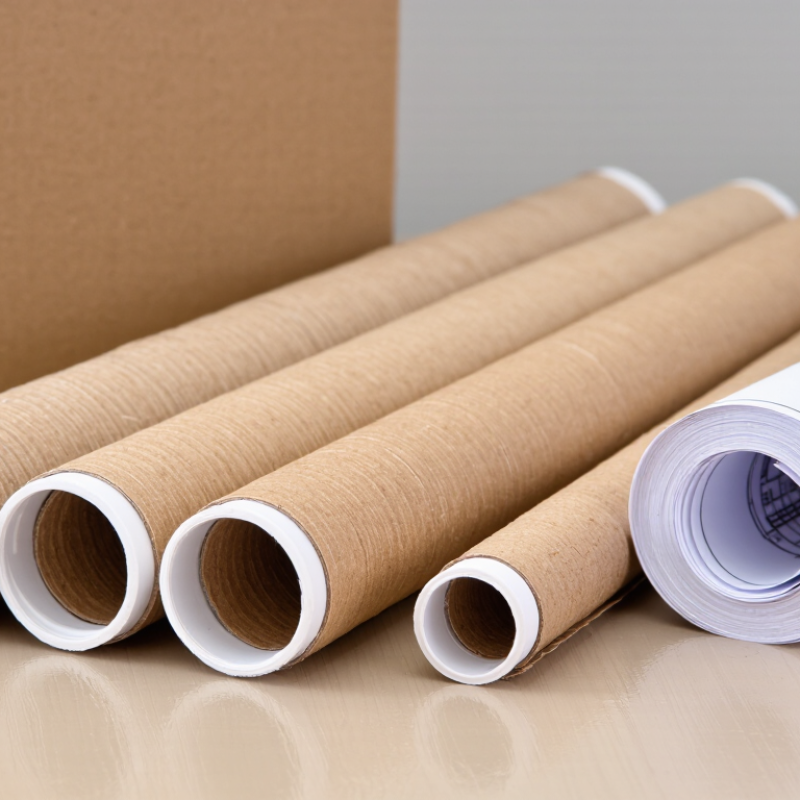
Top Cardboard Postal Tubes for Safe Global Shipping?

Cardboard Postal Tubes: Structure, Materials, and Protective Features

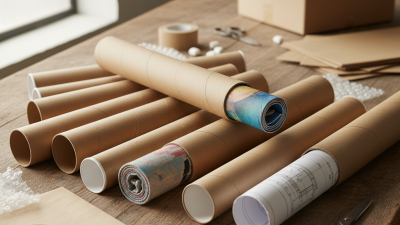
Cardboard postal tubes protect rolled documents, posters, drawings, and fabric during global shipping. Their round structure resists crushing better than flat mailers, especially when parcels are stacked. A strong spiral-wound wall adds stability without excessive weight. End caps matter too. Loose caps can expose contents to moisture, dust, or impact.

Most tubes use layered recycled paperboard with a moisture-resistant outer surface. The material should feel firm, not brittle or overly soft. Protective features may include reinforced ends, snug-fitting plugs, and cushioning paper around delicate contents. For valuable prints, place the item in a clear sleeve before rolling it around a solid inner core. This reduces creases and surface rubbing. However, cardboard is not waterproof. A plastic-free moisture barrier may help, but it should not replace careful packing or weather-aware handling.

Tips: Measure the rolled item first. Leave minimal empty space. Fill gaps with crumpled paper, then test the sealed tube with gentle pressure. Label both ends clearly, and photograph the package before dispatch. Avoid overpacking; excessive force can distort the contents. No tube is perfect. I once underestimated end-cap strength, and the package arrived with a dented rim. A small reinforcement would have prevented it.

Choosing the Right Tube Size for Documents, Posters, and Artwork

Choosing the right cardboard postal tube starts with the item’s dimensions, not the shipping label. Measure the document, poster, or artwork when it is flat. Add enough internal length to prevent edges from touching the caps.

For standard documents, a narrow tube can reduce movement and creasing. A larger tube suits rolled posters, but excessive space may create shifting during transit. Use a tube diameter that allows a relaxed roll. Tight rolling can leave visible curl marks. Artwork needs extra care. Place glassine or acid-free tissue around the surface, then roll it gently with the image facing inward when appropriate. Fragile media may need a wider tube and stronger end protection.

Tips

Check the tube’s internal measurements. External dimensions can be misleading. Insert a firm end disc before sealing each cap. Add a small amount of clean cushioning, but avoid compressing the artwork. Shake the closed tube lightly. If the contents slide, improve the fit. Label the tube with handling information and keep the address panel flat and readable.

A short test shipment can reveal weak caps, moisture problems, or unwanted movement. I once assumed a thicker tube was always safer, but its extra weight increased handling stress. Protection and practicality must work together. For valuable artwork, record its condition before packing and choose moisture-resistant outer wrapping. Shipping conditions vary, so even a carefully selected tube deserves a final inspection.

Top Cardboard Postal Tubes for Safe Global Shipping? - Choosing the Right Tube Size for Documents, Posters, and Artwork
Shipping Application Typical Flat Item Size Recommended Internal Tube Size
(Diameter × Length)
Approximate External Size
(Diameter × Length)
Recommended Tube Construction Suitable Contents Protection and Packing Guidance Global Shipping Considerations
A4 documents 210 × 297 mm
(8.3 × 11.7 in)
Approximately 55 × 340 mm
(2.2 × 13.4 in)
Spiral-wound or convolute-wound cardboard with rigid end caps Certificates, technical drawings, maps, contracts, and rolled forms Roll around a larger-diameter core when possible; place the document in a protective sleeve before insertion. Compact size can reduce dimensional-weight charges. Confirm the carrier's minimum and maximum parcel dimensions.
A3 documents and drawings 297 × 420 mm
(11.7 × 16.5 in)
Approximately 66 × 460 mm
(2.6 × 18.1 in)
Heavy-duty spiral-wound cardboard with friction-fit or reinforced plastic end caps Architectural drawings, engineering plans, menus, and medium-size prints Use acid-free tissue or kraft interleaving for sensitive paper. Leave a small clearance at both tube ends. Measure the sealed parcel, not only the tube body, because caps and protective wrapping affect the billable size.
A2 posters and prints 420 × 594 mm
(16.5 × 23.4 in)
Approximately 82 × 660 mm
(3.2 × 26.0 in)
Thick-wall cardboard tube with securely fitted end caps Posters, photographic prints, presentation boards, and small artwork Roll printed surfaces outward or inward according to the media manufacturer's guidance; avoid tight bends and over-compression. Avoid excessive tube length because some postal services apply oversize surcharges or length restrictions.
A1 posters and artwork 594 × 841 mm
(23.4 × 33.1 in)
Approximately 98 × 910 mm
(3.9 × 35.8 in)
Heavy-duty, multi-ply cardboard with reinforced closures Large posters, canvas prints, exhibition graphics, and framed-art components shipped unframed Use a loose protective sleeve, tissue paper, and crush-resistant end discs. Do not overfill the tube. Check the destination country's customs documentation requirements and declare the contents accurately.
A0 posters and plans 841 × 1189 mm
(33.1 × 46.8 in)
Approximately 110 × 1260 mm
(4.3 × 49.6 in)
Extra-thick multi-ply cardboard with impact-resistant end caps Large engineering plans, banners, exhibition posters, and oversized artwork Use two protective end discs or internal plugs to prevent edge damage and add tamper-evident sealing tape. Long parcels may be subject to carrier-specific surcharges, maximum-length limits, or manual-processing fees.
Fine-art prints and photographs Up to approximately 600 × 900 mm
(23.6 × 35.4 in)
Approximately 110 × 960 mm
(4.3 × 37.8 in)
Archival-quality inner sleeve plus rigid, thick-wall outer cardboard tube Giclée prints, photographic paper, limited-edition prints, and delicate paper artwork Use acid-free tissue, a moisture-resistant inner bag, and a removable core. Keep artwork away from direct contact with adhesive tape. For valuable work, use tracking, delivery confirmation, and insurance where available; verify coverage exclusions before dispatch.
Canvas and rolled textile artwork Up to approximately 700 × 1000 mm
(27.6 × 39.4 in)
Approximately 135 × 1060 mm
(5.3 × 41.7 in)
Large-diameter, heavy-duty cardboard tube with rigid internal core Unstretched canvas, fabric banners, textile samples, and rolled decorative materials Use a wide core to reduce curl memory. Add a moisture barrier and cushion the ends without compressing the fabric. Confirm whether the import destination applies special rules to textiles, treated materials, or cultural artwork.
Multiple documents in one shipment Mixed sizes up to approximately 594 × 841 mm
(23.4 × 33.1 in)
Approximately 110 × 1010 mm
(4.3 × 39.8 in)
Heavy-wall cardboard with internal sleeve and reinforced end closures Grouped drawings, map sets, posters, and document bundles Separate different paper types with interleaving sheets and secure the bundle so it cannot slide inside the tube. Keep the packed weight and final dimensions within the selected service's published limits; rules vary by destination and service level.
Measurement note: A-series paper sizes follow ISO 216: A4 is 210 × 297 mm, A3 is 297 × 420 mm, A2 is 420 × 594 mm, A1 is 594 × 841 mm, and A0 is 841 × 1189 mm. The tube sizes above are practical recommendations rather than universal carrier limits. Always verify the finished parcel's length, diameter, weight, dimensional weight, prohibited-item rules, customs requirements, and insurance conditions before international shipment.

Comparing Tube Closures, Padding, and Moisture Protection

A cardboard postal tube protects rolled documents, posters, and artwork only when its closure matches the shipment. I prefer tight-fitting end caps for routine parcels because they resist accidental opening during sorting. For heavier contents, locking plastic or metal ends can provide stronger retention. However, closures that are too tight may crush the tube edges. Fit matters. I check both ends by hand before labeling each parcel.

Padding should prevent movement without creating pressure points. A narrow paper wrap around the item works well inside a snug tube. For fragile prints, I add a smooth inner sleeve and leave a small buffer at both ends. Loose filler can shift during transport, while excessive padding may bend the contents. I learned this through testing, not assumption. A gentle shake should produce little movement.

Moisture protection needs more attention in global shipping. Cardboard absorbs damp air, rain, and condensation near loading areas. I place the rolled item in a sealed, moisture-resistant sleeve before adding it to the tube. Desiccant can help, but it cannot replace a reliable outer barrier. The tube should also be stored above wet floors and protected from direct rain. I still inspect samples after humid storage, because packaging tests do not perfectly copy every route. A stronger closure is useful, but dry materials and careful handling remain equally important.

Packing and Labeling Cardboard Tubes for International Transit

Top Cardboard Postal Tubes for Safe Global Shipping?

Packing and Labeling Cardboard Tubes for International Transit

A strong cardboard postal tube starts with the document or poster inside. I measure the item before choosing the tube, leaving only limited space for cushioning. Excess room allows the contents to slide and crease during handling. A snug fit works better. I wrap delicate prints in acid-free paper, then add a thin protective layer against moisture. Plastic end caps should fit firmly, while reinforced tape helps prevent accidental opening. I always press around both ends before dispatch. Small weaknesses become expensive problems overseas.

The shipping label needs a clean, flat area. I avoid placing it across the tube’s seam or curved edge when possible. The recipient’s name, complete street address, postal code, country, and contact number should be easy to read. A clear return address is equally important. For customs paperwork, I use an honest, specific description, accurate value, country of origin, and the correct tariff information when required. Vague wording can delay inspection. The barcode must remain uncovered and free from folds.

Keep it visible.

I also mark the tube’s orientation when the contents require care, although handling symbols cannot replace strong packaging. Before international transit, I test a sealed sample with gentle drops and rolling pressure. It is not a laboratory certification. Still, it reveals loose caps and weak tape. My process is not perfect; humidity can soften cardboard, and labels sometimes peel after long exposure. A waterproof pouch for documents offers useful protection. I check the tracking number and label photos twice.

Tiny details matter.

Evaluating Tube Strength, Sustainability, and Shipping Costs

Top Cardboard Postal Tubes for Safe Global Shipping

Evaluating Tube Strength, Sustainability, and Shipping Costs

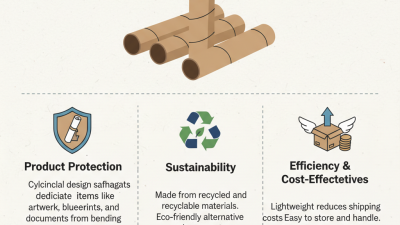
A strong postal tube protects rolled posters, drawings, and documents during long international journeys. I test tubes with repeated drops, corner pressure, and moisture exposure before recommending them. Spiral-wound cardboard usually resists crushing better than thin, loosely wrapped paperboard. End caps also matter. A secure cap should stay attached when the tube is lifted and shaken.

Sustainability requires more than choosing brown cardboard. Look for recycled fiber, water-based adhesives, and minimal plastic packaging. A recyclable tube can still create waste if oversized filler protects it. I prefer a close fit, but not a tight one that bends valuable prints. Moisture remains a weakness. A paper tube left beside a wet loading bay may soften quickly, even when its walls look thick.

Shipping cost depends heavily on length, diameter, weight, and dimensional pricing. A lightweight tube may cost more than expected because carriers charge for its occupied space. My first estimate was wrong. That mistake matters. Compare packed measurements from several carriers, not empty-tube specifications. Shorter tubes can reduce charges, but folding artwork may damage it. For reliable international delivery, record the package dimensions, test the closure, and check each carrier’s current packaging requirements before dispatch. Small details create large differences.

© 2025 Cardboard Tubes | Registered in England and Wales.
Company Number 2402078