

In today's fast-paced production environments, Machine Vision Inspection plays a crucial role. It enhances quality control and operational efficiency. Industries rely on this technology to detect defects and ensure product standards.
Machine Vision Inspection utilizes advanced cameras and algorithms. These systems inspect products with precision. They can identify even the smallest flaws. This capability is vital in sectors like automotive and electronics. However, there are challenges. Not every inspection system is foolproof. Some may overlook issues or misinterpret data.
The benefits of these applications are significant. Yet, it is essential to understand their limitations. Balancing technology with human expertise is key. This interplay ensures that faults are not missed and standards are upheld. In the following sections, we will explore the top ten applications of Machine Vision Inspection. Each application provides insights into its unique capabilities and challenges.
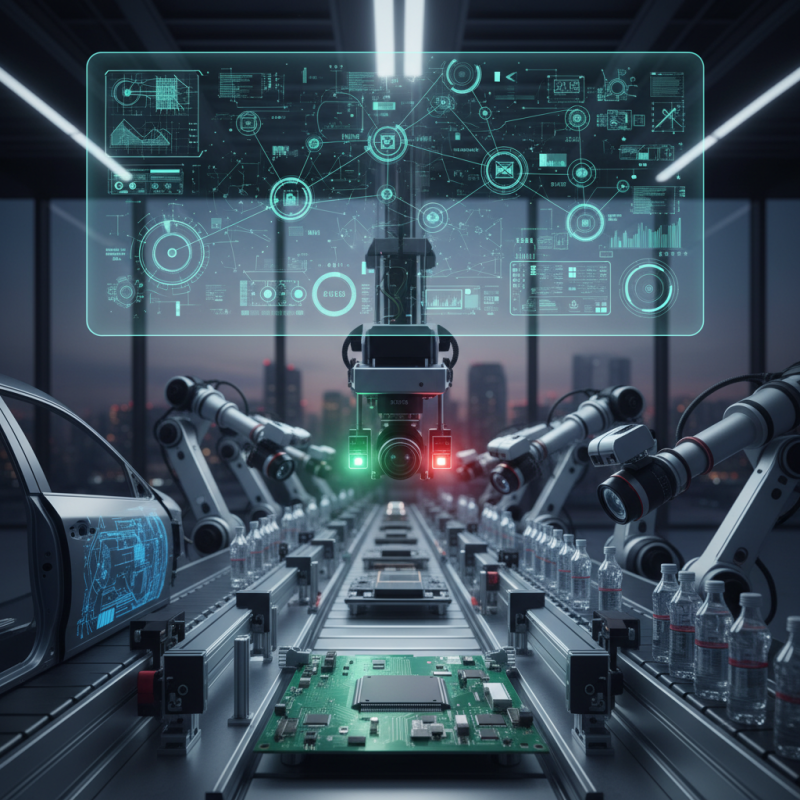
Machine vision technology plays a crucial role in quality control processes across various industries. It offers precise inspection capabilities that ensure products meet stringent standards. Automated inspections can detect defects in real-time, helping to maintain high quality and consistency. This technology can identify issues such as misalignments, surface damage, or incorrect labeling on production lines.
In some cases, machine vision systems can be over-reliant on algorithms. They may struggle with complex patterns or variations that were not anticipated during the programming phase. Misinterpretation of visual data can result in false positives or missed defects. Adjusting these systems requires careful fine-tuning. Human oversight remains essential, even with advanced machine vision technology. Combining human insight with automated processes can enhance overall quality assurance efforts. Regular updates and training sessions are vital to address the emerging challenges within different manufacturing environments.
Machine vision systems significantly enhance manufacturing efficiency. They automate inspection tasks that were once labor-intensive. By implementing these systems, manufacturers can achieve consistent quality control. This reduces the need for manual inspections that can be prone to errors. Improved accuracy leads to fewer defects in products. The result? Better customer satisfaction and lower return rates.
Cost reduction is another crucial benefit. Machine vision can streamline operations and reduce labor costs. These systems often operate faster than human inspectors. This speed increases throughput without sacrificing quality. Additionally, they can work 24/7, maximizing production time. However, the initial investment in these technologies can be substantial. Not every implementation yields immediate returns.
Many companies face challenges in integration. Training staff to work with new systems takes time and resources. Results may vary based on the specific application and environment. It's critical to analyze long-term benefits versus short-term challenges. Continual assessment is necessary. By refining the integration process, manufacturers can better leverage machine vision technology. This approach can lead to more significant gains in efficiency and cost savings over time.
Machine vision plays a vital role in the food and beverage industry. It helps ensure product quality and safety. Visual inspection systems can detect defects or inconsistencies in packaging. They can also check for proper labeling and expiration dates. These processes enhance efficiency and reduce waste significantly.
However, reliance on machine vision isn't without challenges. Sometimes, these systems may overlook subtle defects due to poor lighting or camera angles. These oversights can lead to compromised product quality. Additionally, integrating machine vision with existing production lines can be complex. Maintenance and calibration often require skilled personnel.
Aside from the technical aspects, the human factor is crucial. Operators must be trained to interpret the system's data accurately. Misinterpretation can result in unnecessary product rejection. Balancing technology and human insight is essential for optimal outcomes. Regular feedback and adjustments can improve the inspection process. Therefore, while machine vision offers numerous benefits, awareness of its limitations is equally important.
| Application | Description | Benefits | Common Technologies |
|---|---|---|---|
| Quality Control | Automated inspection of products for defects and compliance. | Increased efficiency and reduced waste. | Cameras, image processing software. |
| Label Inspection | Verification of labels for accuracy and positioning. | Ensures compliance with regulations and brand integrity. | OCR (Optical Character Recognition), image analysis. |
| Foreign Object Detection | Identification of foreign materials in products. | Enhances food safety and customer trust. | Thermal imaging, spectral analysis. |
| Size and Shape Inspection | Measurement of product dimensions and conformity. | Reduces missized products and enhances consistency. | 3D imaging, laser scanning. |
| Color Inspection | Assessment of product color for consistency. | Maintains brand standards and aesthetic appeal. | Color cameras, image processing algorithms. |
| Pack Integrity Testing | Check packaging for leaks or seals. | Enhances product shelf-life and safety. | Pressure sensors, image analysis. |
| Weight Verification | Ensure products meet weight specifications. | Ensures compliance with labeling regulations. | Scale integration, image validation. |
| Assembly Verification | Verification of component placement and assembly. | Reduces assembly errors and improves product reliability. | Machine vision cameras, image processing. |
| Product Sorting | Automated sorting of products based on quality. | Increases operational efficiency and reduces labor costs. | Cameras, sorting algorithms. |
Machine vision inspection relies on key technologies that drive its advancements. Cameras with higher resolution capture more details. This results in better inspection quality. Image processing algorithms also play a critical role. They convert raw image data into useful information swiftly. Deep learning technologies have emerged as vital components. They enhance the system's ability to identify defects automatically.
Tips: Regularly train your machine vision system with new data. This keeps it sharp. Over time, systems may not perform as expected. Continuous learning and updates are essential.
Another crucial technology is 3D imaging. This allows for more accurate measurements of complex objects. Inspectors can now gauge shapes and volumes effectively. The integration of AI with machine vision checkpoints improves accuracy. However, sometimes the systems misinterpret images, leading to errors. Continuous monitoring and feedback loops can help refine these processes.
Tips: Always validate the AI’s decisions. A small oversight can result in major issues. Frequent audits of the inspection results can save costs and reduce risks.
Machine vision is rapidly transforming industries. As we enter the next decade, these technologies will play a pivotal role in automation and quality control. A recent report by MarketsandMarkets predicts that the machine vision market will reach $17.4 billion by 2025, reflecting a compound annual growth rate of over 7%. This growth is tied to the increasing demand for real-time inspection and analytics.
Tips: Invest in training for staff. Understanding machine vision can enhance productivity. Regularly assess your machine vision systems. Outdated technology can hinder efficiency.
Several trends indicate how this field will evolve. AI and deep learning are enhancing capabilities. Companies can analyze thousands of images rapidly. This improves defect detection rates. However, the reliance on AI also raises questions. Bias and error in machine learning can lead to uncertainties. It's vital to maintain a human oversight element.
Tips: Explore partnerships with tech firms. Collaboration can bring new insights. Always validate AI outputs to minimize risks.
Data from the International Society for Automation shows that machine vision can reduce inspection time by up to 90%. Yet, not all businesses are prepared for this transition. Lack of integration into existing workflows can stall progress. Continuous learning and adaptation are essential to harness machine vision's full potential.
© 2025 Cardboard Tubes | Registered in England and Wales.
Company Number 2402078

