10 Craft Cardboard Buying Tips for Global Buyers
Buying craft cardboard for international markets requires more than comparing prices per sheet. Fibre strength, surface finish, moisture resistance, and print quality can change dramatically between suppliers. A carton that looks sturdy in a showroom may soften beside a humid loading dock. Small details matter.
Dennis Colley, former president and CEO of the Fibre Box Association, offers a practical reminder: “The box must perform in the distribution environment, not merely look strong.” This principle should guide every craft cardboard decision. Buyers need to examine paper weight, flute structure, recycled content, edge crush strength, and supplier consistency. They should also request samples before approving large volumes. A sample reveals curling, weak folds, uneven color, and rough cutting more honestly than a product sheet.
Real purchasing work is rarely perfect. Specifications may be incomplete. Communication can fail across languages and time zones. Even trusted suppliers sometimes deliver inconsistent batches. That is why global buyers should document tolerances, packaging tests, pallet conditions, lead times, and inspection procedures. Ask uncomfortable questions early. They save money later.
This guide presents ten practical craft cardboard buying tips for international purchasers. It considers product performance, customization, sustainability claims, shipping risks, and total cost. Cheap cardboard is not always economical. Sometimes, a stronger board reduces product damage and customer complaints. Sometimes, an expensive finish adds little value. Careful buyers test, compare, and revise their assumptions before committing.
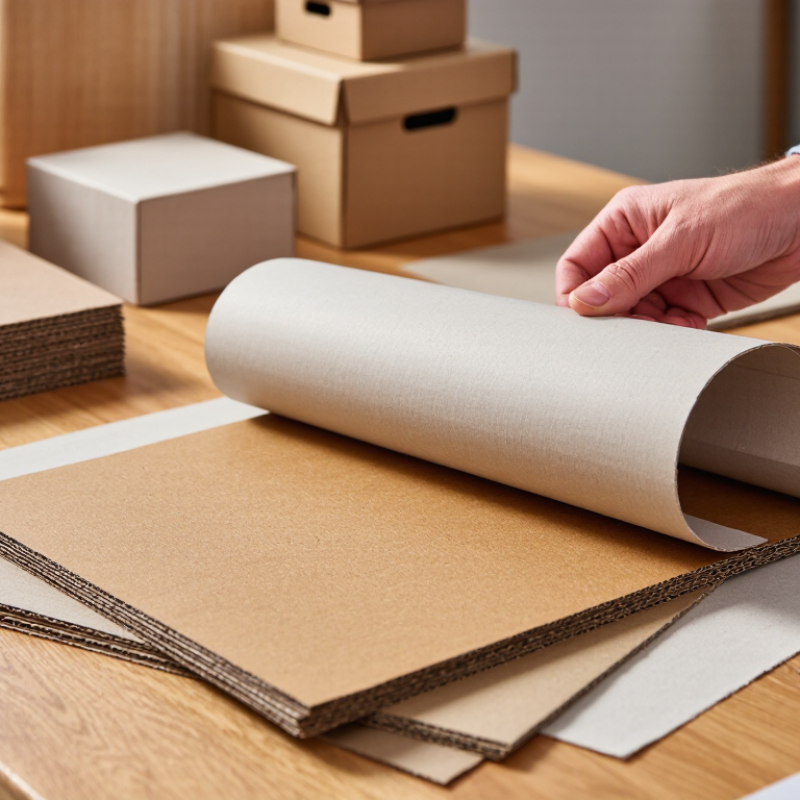
Define Craft Cardboard Types, Grades, and Intended Uses
Craft cardboard is not one universal material. Buyers should define its structure before comparing prices. Corrugated cardboard has fluted layers for cushioning and stacking strength. Solid board has a dense, smooth surface for folders, tags, and premium packaging. Kraft-faced board offers a natural appearance and useful tear resistance. Recycled board can reduce material impact, but its color and surface may vary.
Grade selection depends on measurable properties. Check grammage, caliper, moisture resistance, and edge crush strength. Grammage shows weight per square meter, not total performance. A thicker sheet can still fail under humidity or poor box design. For fragile goods, select a suitable flute profile and test compression strength. For printed sleeves, prioritize smoothness, stiffness, and coating compatibility. Samples should be tested with the actual product inside.
Intended use should guide every specification. Retail displays need clean edges and reliable scoring. Shipping cartons need stacking strength and stable dimensions. Handmade cards may require bright surfaces and accurate folding. In purchasing reviews, a common mistake is choosing the lowest price before defining use conditions. I have also seen buyers over-specify board for lightweight products. That wastes space and budget. A practical check is simple: fold the sample, print on it, and expose it briefly to humid air. The result may challenge your first choice. Suppliers should provide consistent technical data, sample records, and clear tolerance ranges. Consistency matters more than impressive claims.
Assess Material Quality, Strength, and Surface Finish
Buying craft cardboard for international production requires more than checking color and price. Assess fiber quality, thickness, and moisture content before approving a shipment. A dense, even sheet usually folds cleanly and resists tearing. Uneven edges may reveal poor cutting or unstable production control.
Measure GSM and caliper across several points, not just the center. Small variations can affect die-cutting, stacking, and finished dimensions. Request recent strength data, including compression, burst, or tear resistance where relevant. Match the test method to your packaging design. A strong sheet on paper may still fail after scoring.
Surface finish deserves equal attention. Run your finger across the sheet and look for dust, pinholes, rough patches, or waviness. These defects can weaken printed areas and reduce adhesive contact. Test folding, printing, and gluing with samples from different production lots. I once trusted a smooth sample, but the larger shipment showed inconsistent texture. That mistake taught me to inspect both sides under direct light. Ask for tolerances, inspection records, and moisture-control details. Supplier documents help, but physical testing remains essential. Clean appearance is not proof of reliable performance.
10 Craft Cardboard Buying Tips for Global Buyers
Assess material quality, strength, and surface finish with measurable incoming-inspection checkpoints.
The chart shows practical reference targets commonly used in corrugated-board purchasing. Moisture, Cobb water absorption, edge crush strength, and burst performance must be compared within their own units rather than against one another. Confirm the final specification with the applicable ISO or ASTM test method and the intended box design.
1. Confirm paper grade
Specify kraft, test liner, recycled liner, or fluting paper.
2. Check basis weight
Verify grammage against the approved purchase specification.
3. Measure moisture
Target stable moisture to reduce warping and dimensional changes.
4. Test edge crush strength
Use ECT to assess stacking performance of corrugated board.
5. Check burst resistance
Use burst testing to evaluate resistance to puncture and rupture.
6. Review Cobb water absorption
Lower Cobb values generally indicate better short-term water resistance.
7. Inspect flute formation
Look for uniform flute height, spacing, and compression.
8. Assess surface finish
Check smoothness, cleanliness, coating consistency, and printability.
9. Verify dimensional accuracy
Check board thickness, sheet size, squareness, and caliper variation.
10. Request a batch certificate
Match test results, lot numbers, and inspection samples before shipment.
Reference methods: ISO 287 for paper and board moisture, ISO 535 for Cobb water absorption, ISO 3037 for edge crush resistance, and ISO 2759 for bursting strength. The displayed values are buyer-side reference targets and should be adapted to the board grade, climate, packaging structure, and end-use requirements.
Compare Suppliers, Certifications, and Production Capabilities
10 Craft Cardboard Buying Tips for Global Buyers
Compare suppliers by evidence, not polished websites. Request recent samples with the same paper weight, dimensions, coating, and printing method. Check edge sharpness, fold accuracy, surface fibers, and odor. Small defects become expensive during packing.
Ask each supplier for current certificates and test reports. Verify certificate numbers, issuing bodies, covered facilities, and expiry dates. Responsible suppliers should explain quality controls clearly. ISO 9001 may show process discipline, while responsible-forestry certification supports material traceability. Food-contact packaging needs different documentation. Do not accept a logo alone. A document without scope proves little.
Production capability matters as much as certification. Compare monthly capacity, minimum order quantities, cutting tolerances, printing colors, and moisture protection. Ask how the factory handles rush orders and rejected batches. Review equipment records and inspection points when possible. A factory may promise ten-day delivery, yet raw material shortages can change the schedule. Build a realistic buffer. No supplier is perfect. My own comparison checklist would include response speed, sample consistency, corrective-action records, and transparent pricing. Cheap cardboard can warp in humid storage. A slightly higher quote may reduce waste, repacking, and shipping damage. Request a pilot order before signing a large contract. Measure the results, record the weaknesses, and revise your buying criteria.
Confirm Samples, Packaging Standards, and Order Terms
When buying craft cardboard internationally, confirm a physical sample before discussing volume.
Measure length, width, caliper, flute profile, and folding accuracy. Test the sample with your actual product, not an empty box. Check printing, glue lines, edge damage, and odor. A carton that looks strong may collapse after stacking. Smithers’ 2024 market analysis places global corrugated packaging value above US$200 billion, with continued growth expected through 2029. That scale makes small specification errors expensive.
Packaging standards need written evidence.
Request compression, bursting, moisture, and edge-crush test results. For transport packaging, ask whether the design follows ISO 18601 principles and whether ISTA testing is suitable for your shipping route. Record the test temperature and humidity. Cardboard performance changes in a damp warehouse. The World Bank’s What a Waste 2.0 reports 2.01 billion tonnes of municipal solid waste annually worldwide. Efficient sizing matters. Less empty space can reduce material use and freight volume. Still, “eco-friendly” is not a test result. Ask for measurable recycled content, material grade, and tolerance limits.
Order terms should remove awkward surprises.
Specify sample approval, acceptable variation, minimum order quantity, production lead time, inspection rights, packaging method, and claim deadlines. Define who pays for rework or damaged cartons. Confirm the Incoterm, payment stages, and documents before signing. Keep one approved sample with the purchase order. It is not perfect, though. Color may shift slightly between batches, and transport conditions can defeat careful planning. A pre-shipment inspection catches some problems, but not every one. That is why realistic tolerances and clear communication matter.