

Top Strong Cardboard Types for Global Shipping?
Choosing the right cardboard can determine whether a shipment arrives clean, crushed, or unexpectedly damp. Strong cardboard is not one universal material. Its performance depends on product weight, stacking pressure, moisture exposure, vibration, and transport distance.
Corrugated cardboard remains a practical choice for many international shipments. Single-wall cartons suit lightweight products and shorter routes. Double-wall board offers better compression resistance for heavier goods. Triple-wall cartons can protect industrial parts, dense equipment, and unusually fragile cargo. Kraft liners often provide useful tear strength, while recycled liners can reduce environmental impact when properly specified.
Packaging professionals should examine flute profiles, edge crush test ratings, burst strength, and box dimensions. A smaller, well-fitted carton may outperform a thicker box with too much empty space. Internal dividers, corner pads, and moisture-resistant coatings can also improve protection. They are not always necessary. Overpacking adds weight and freight cost.
Real-world testing matters. A carton that survives a warehouse may fail after repeated loading, rain exposure, and long-distance handling. ISTA-style distribution tests can reveal weak seams and poor cushioning before shipment. Yet test results are not absolute. Actual routes vary, and packaging assumptions sometimes prove wrong. That deserves honest review.
For global shipping, the strongest option balances protection, weight, cost, sustainability, and regional handling conditions. No single cardboard type wins every route. The best decision starts with the product and its journey, not the carton label.
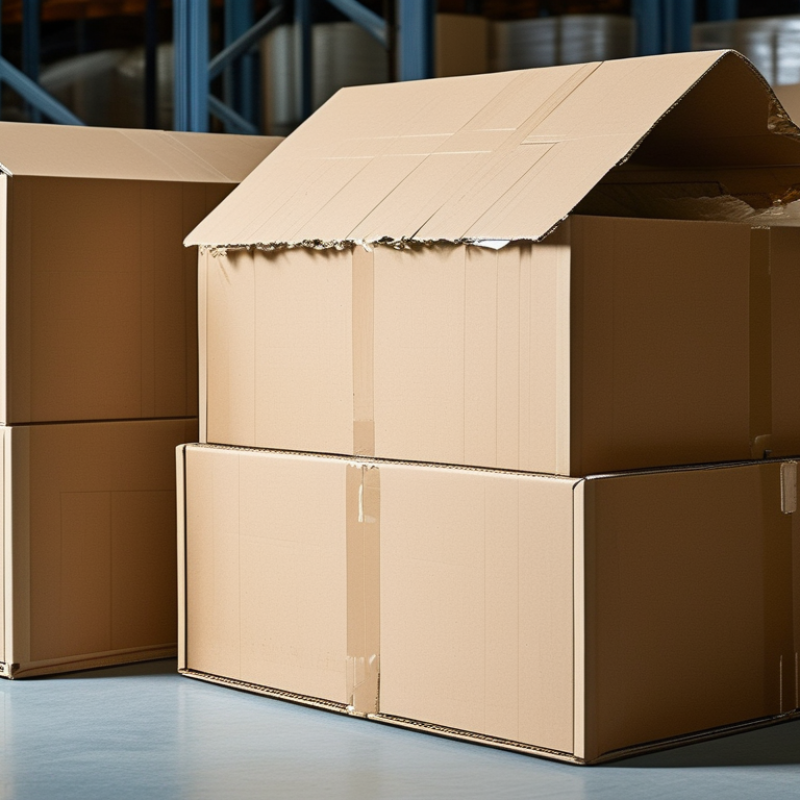
What Makes Cardboard Strong Enough for Global Shipping?
Strong cardboard for global shipping begins with the flute structure, not thickness alone. Single-wall corrugated board suits lighter parcels, while double-wall board adds a second cushioning layer for long routes and stacked pallets. The key measurement is edge crush test, or ECT. A 44 ECT board can resist about 44 pounds per linear inch before edge failure under laboratory conditions. Real shipments are less forgiving.
Moisture changes everything. The International Safe Transit Association’s testing procedures include vibration, compression, and repeated drops because cartons face more than one hazard. A box crossing humid ports may lose substantial stacking strength. Industry guidance from the Fibre Box Association notes that high humidity can reduce corrugated compression performance by roughly 30–50 percent. That range is alarming. It also depends on paper quality, flute direction, and exposure time. Wax coatings or moisture-resistant liners may help, but they can complicate recycling.
Box strength should match the product, pallet height, route, and warehouse climate. ASTM D4169 testing can simulate distribution hazards, while ISO 12048 measures compression resistance for filled packages. Designers often use the McKee formula, linking ECT, board thickness, and box perimeter. Yet formulas cannot predict every crushed corner or poorly secured load. A practical trial should include heavier stacking, damp conditions, and reused handling. Sometimes the “strongest” board is simply overbuilt, wasteful, and still badly packed.
Top Strong Cardboard Types for Global Shipping? - What Makes Cardboard Strong Enough for Global Shipping?
| Cardboard Type | Typical Construction | Typical Thickness | Relative Strength | Stacking Performance | Best Global-Shipping Applications | Important Considerations |
|---|---|---|---|---|---|---|
| Single-Wall Corrugated Board | One fluted medium between two linerboards | Approximately 1.5–5 mm, depending on flute profile | Moderate | Suitable for light to medium loads when properly designed | Books, clothing, packaged consumer goods, and small parts | Lower weight and cost, but less resistant to compression, puncture, and repeated handling than multi-wall grades |
| Double-Wall Corrugated Board | Two fluted mediums separated by a linerboard | Approximately 6–8 mm | High | Good resistance to stacking and panel bulging | Machinery parts, appliances, dense products, and mixed-load export cartons | A strong general-purpose choice for long-distance shipping; uses more material and occupies more space |
| Triple-Wall Corrugated Board | Three fluted mediums with four linerboards | Approximately 10–15 mm | Very high | Excellent for heavy loads and demanding stacking conditions | Large industrial components, heavy equipment, and oversized export shipments | Provides high compression and puncture resistance, but is heavier, bulkier, and usually more expensive |
| Heavy-Duty Kraft-Liner Corrugated Board | Corrugated board using strong kraft liner on the outer and/or inner faces | Varies by wall type and liner basis weight | High to very high | Strong resistance to edge crush and box compression when engineered correctly | High-value goods, dense products, and shipments exposed to repeated handling | Kraft fibers generally provide good tensile strength and tear resistance; performance still depends on moisture and box design |
| BC-Flute Double-Wall Board | A combination of B-flute and C-flute layers | Approximately 6–7 mm | High | Very good stacking strength with useful cushioning | Export cartons containing fragile, heavy, or irregularly shaped products | Combines a relatively fine flute for surface durability with a larger flute for cushioning and rigidity |
| Honeycomb Paperboard | Cellular paper core bonded between flat paper facings | Commonly about 10–50 mm, depending on the panel design | High for its weight | Good panel stiffness and load distribution | Pallet layers, edge protection, dividers, and large flat products | Lightweight and recyclable, but exposed edges and prolonged humidity can reduce performance |
| Moisture-Resistant Corrugated Board | Corrugated board with treated liners, coatings, or water-resistant adhesives | Depends on the selected wall construction | High in humid conditions when properly specified | Retains strength better than untreated board during temporary humidity exposure | Ocean freight, tropical routes, refrigerated logistics, and extended warehouse storage | Water resistance is not the same as waterproofing; severe or prolonged wet exposure may still require an additional barrier |
Related Posts
-

Why Choose Industrial Cardboard for Your Packaging Needs?
-
What Is the Best Industrial Cardboard Type in 2026?
-

2026 Top Craft Cardboard Ideas for Creative Projects and Inspiration?
-
Top 10 Premium Packaging Trends at the 139th Canton Fair?
-
Where to Buy Quality Cardboard Rolls for Your Business?
-
How to Choose Delivery Packaging for Global Shipping in 2026?
© 2025 Cardboard Tubes | Registered in England and Wales.
Company Number 2402078