

Why Choose Mail Tubes for Shipping Documents and Posters?
When documents and posters leave your facility, their packaging becomes part of their message. Bent corners, crushed edges, or moisture marks can damage more than paper. They can weaken customer confidence.
Mail tubes offer a simple, focused solution. Their cylindrical shape resists many side impacts during handling. A rigid kraft tube can keep architectural drawings, event posters, certificates, and large-format prints rolled securely. End caps help prevent contents from sliding out. A close fit also reduces unnecessary movement inside the package.
David Newell, president of Yazoo Mills, a long-established paper tube manufacturer, has emphasized, “A shipping tube should be chosen for the product, not just the price.” That practical view matters. A thin tube may look economical, yet it can fail under warehouse pressure or repeated transport. Stronger walls, dependable closures, and accurate sizing often protect the shipment more effectively.
Fit matters.
A tube that is too narrow may crease a poster. One that is too wide may allow damaging movement. Documents also need careful rolling, especially when paper has been stored flat for a long time. Mail tubes do not solve every packaging problem. They are less suitable for rigid boards, framed artwork, or materials that must remain completely flat.
This guide examines why mail tubes remain useful for shipping documents and posters. It considers protection, presentation, material choice, labeling, and practical handling costs. Some packaging decisions are still imperfect. However, a carefully matched tube can make delivery safer, cleaner, and more professional.
What Are Mail Tubes and What Are They Used For?
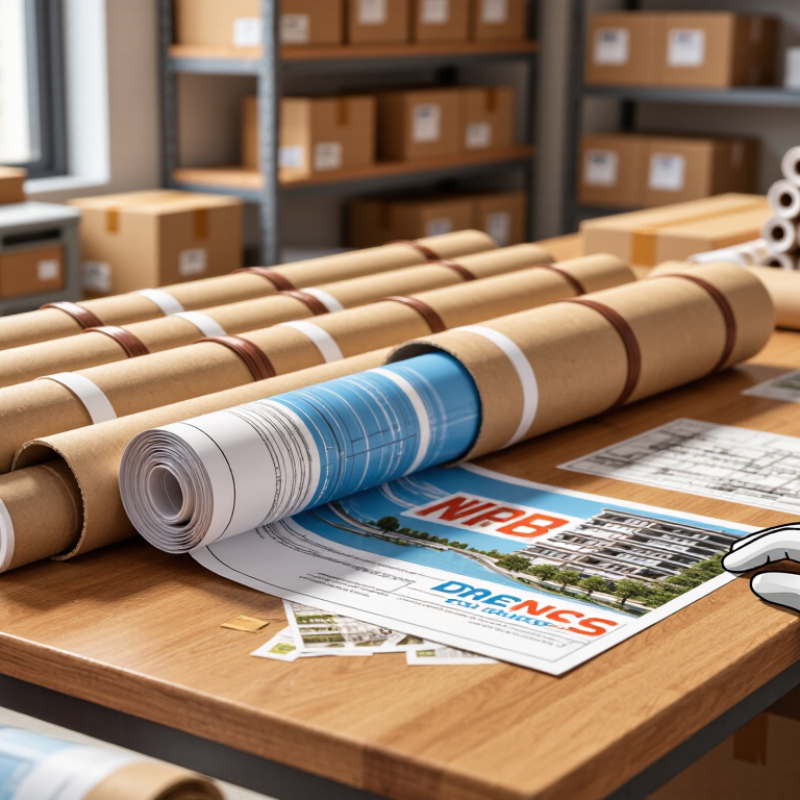
Mail tubes are rigid containers designed to protect rolled documents, posters, blueprints, certificates, and artwork during shipping. Unlike flat envelopes, they reduce folding, creasing, and edge damage. Most tubes use sturdy cardboard, plastic, or reinforced paperboard. Their round shape spreads pressure when parcels are stacked or handled.
A poster placed inside a properly sized tube usually arrives with cleaner edges and fewer wrinkles. Documents should be rolled loosely, with the printed surface facing inward when appropriate. Avoid forcing thick materials into narrow tubes. That mistake can create permanent curls or surface marks. End caps must fit tightly, but they should still be easy to remove without damaging the contents. From practical packing experience, extra space is useful only when filled with clean cushioning material.
Tips: Measure the rolled item before choosing a tube. Add protective tissue or a thin sleeve for delicate paper. Seal both caps securely, then label the package on a flat section. Check the tube for dents before handing it to a carrier. A tube is not damage-proof. Rough handling, moisture, and poor sizing can still affect the shipment.
Why Choose Mail Tubes for Shipping Documents and Posters? - What Are Mail Tubes and What Are They Used For?
| Data Dimension | Mail Tube Information | Typical Practical Range or Detail | Why It Matters for Shipping |
|---|---|---|---|
| Basic Definition | A rigid cylindrical or triangular mailing container designed to hold rolled materials. | Commonly made from spiral-wound paperboard, corrugated fiberboard, or heavy-duty plastic. | The rigid structure helps prevent documents and posters from being folded, creased, or bent. |
| Typical Contents | Posters, architectural drawings, maps, blueprints, certificates, banners, calendars, and other rolled documents. | Best suited to flat, flexible items that can be rolled without damaging the printed or written surface. | Keeps large-format materials compact while preserving their usable surface area. |
| Common Tube Lengths | Mailing tubes are manufactured in multiple lengths to match the item being shipped. | Approximately 12–48 inches (30–122 cm), with longer formats available for specialized materials. | Selecting a close-fitting length reduces unnecessary movement and packaging waste. |
| Common Internal Diameters | The internal diameter determines how tightly or loosely the material can be rolled. | Approximately 2–6 inches (5–15 cm) for many document and poster applications. | A suitable diameter helps prevent tight curls, edge damage, and difficult unpacking. |
| Shape Options | Round tubes are traditional; triangular tubes are also widely used for mailing rolled documents. | Round tubes provide a cylindrical interior, while triangular tubes are less likely to roll during handling. | Shape affects stability, storage, stacking, and the way the package is handled in transit. |
| Protection Against Bending | High protection when the tube wall is rigid and the end closures are securely fitted. | More resistant to folding and crushing than ordinary paper envelopes or thin mailers. | Useful for preserving sharp, professional-looking posters and technical drawings. |
| Closure Methods | Available with plastic end caps, fiber end plugs, snap-on closures, or integrated self-sealing ends. | The closure should fit tightly and remain secured throughout sorting and transportation. | A secure closure reduces the risk of contents slipping out or becoming exposed to dust and moisture. |
| Moisture Resistance | Paperboard tubes offer limited moisture resistance unless coated or placed inside an additional protective layer. | Plastic tubes and coated paperboard provide greater resistance to rain and humidity than untreated paperboard. | The outer material should match the expected shipping environment and storage conditions. |
| Space Efficiency | Rolling reduces the package footprint compared with shipping a large flat sheet. | Particularly efficient for items larger than standard letter or document sizes. | Smaller package dimensions can simplify storage, handling, and shipment preparation. |
| Weight Consideration | The empty tube is generally lightweight, but weight varies by material, wall thickness, length, and closures. | Paperboard models are commonly lighter than heavy-duty plastic or reinforced tubes of similar size. | Lower packaging weight can help control the total shipment weight, subject to carrier rules. |
| Reusable Potential | Rigid tubes can often be reused if they remain dry, structurally sound, and clean. | Reusable potential depends on the material, closure design, and condition after the first shipment. | Reuse may reduce packaging consumption and provide convenient storage for rolled documents. |
| Best Use Case | Large-format materials where avoiding folds and creases is more important than maintaining a flat package. | Posters, plans, maps, artwork prints, certificates, and rolled promotional materials. | Provides a practical balance between protection, compactness, and ease of handling. |
Note: Dimensions and performance ranges are general industry examples. Actual tube specifications, maximum load, moisture resistance, and carrier acceptance requirements vary by product design and shipping service.
Related Posts
-

How to Choose Cardboard Tubes for Shipping in 2026?
-

10 Tips for Choosing Poster Tubes for Shipping?
-
Top Cardboard Postal Tubes for Safe Global Shipping?
-

Exploring the Rise of Sustainable Kraft Tubes: Why Brands Are Making the Switch in 2023
-

What Are Kraft Tubes and Their Common Uses?
-

Top 10 Kraft Tubes Suppliers for Global Buyers in 2026?
© 2025 Cardboard Tubes | Registered in England and Wales.
Company Number 2402078