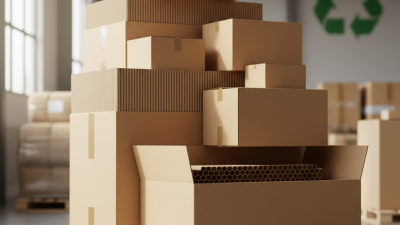

Cardboard packaging is a familiar part of daily commerce. It protects cereal, cosmetics, electronics, food, and many shipped products. Yet “cardboard” is not one uniform material. Its strength, surface finish, moisture resistance, and recyclability depend on its structure and production process.
In practical packaging work, the main types include corrugated boxes, folding cartons, rigid paperboard boxes, and honeycomb board. Corrugated packaging combines liners with a fluted inner layer. This structure helps absorb impacts during transport. Folding cartons use thinner paperboard and often hold retail products on shelves. Rigid boxes feel stronger and more premium. Honeycomb board provides lightweight support for larger items and protective inserts.
Material choice should match the product, supply chain, and customer experience. A heavy machine part needs different protection from a small chocolate box. Designers may consider board thickness, flute profile, compression strength, printing quality, and closure style. Moisture is another concern. Ordinary fiberboard can soften when exposed to water or humid storage areas.
Small details matter.
A poorly fitted box can waste space. An undersized box may crush easily. In my view, sustainability claims also require careful judgment. Recyclable fiber does not automatically mean low-impact packaging. Coatings, adhesives, inks, transport distance, and repeated handling can change the result. This guide explains cardboard packaging types, common applications, practical advantages, and limitations. It also encourages a realistic question: is the simplest package sometimes the most responsible choice? The answer depends on evidence, not appearance alone.
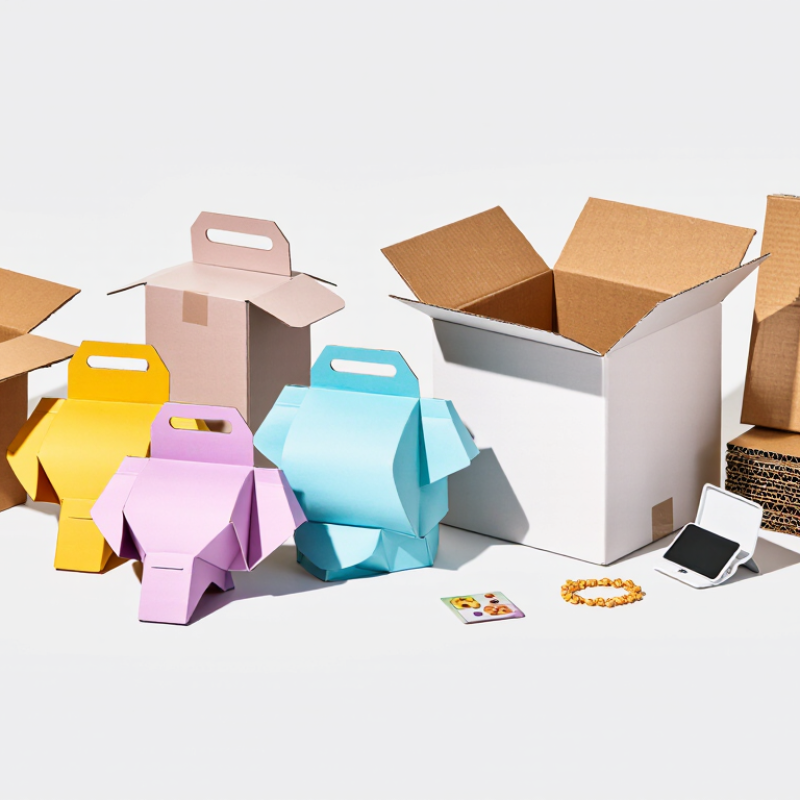
Cardboard packaging is a paper-based material shaped to protect, contain, and present products. Its core structure is made from cellulose fibers, usually formed into paperboard or corrugated board. Paperboard is dense and smooth, making it suitable for folding cartons. Corrugated board adds a fluted inner layer between two liners. This structure improves cushioning and stacking strength without adding much weight.
Thickness, fiber quality, moisture resistance, and printability determine practical performance. A carton may feel rigid in a store but weaken quickly in a humid warehouse. That detail is often overlooked. According to the U.S. Environmental Protection Agency’s 2018 data, paper and paperboard containers and packaging generated about 41.9 million tons of waste in the United States. Around 22.1 million tons were recovered through recycling. The figures show both the scale and the unfinished work of fiber packaging.
Common types include folding cartons, corrugated boxes, rigid paperboard boxes, and paper-based tubes. Folding cartons use creases and locking tabs, so they ship flat and assemble efficiently. Corrugated boxes handle heavier loads and repeated movement. Rigid boxes offer a stronger, more structured presentation. Their performance depends on board grade and flute design. The European paper industry’s 2023 statistics also indicate that paper and board remain major manufacturing materials across the region. Still, “recyclable” does not mean automatically sustainable. Coatings, adhesives, food residue, and poor collection systems can change the result. That assumption needs more careful testing.
Cardboard packaging is usually made from paper-based materials, but its structure varies widely. Paperboard is a dense, smooth sheet used for cartons, sleeves, and product inserts. Corrugated board adds a fluted inner layer between two liner sheets. This design creates air space, improving strength without adding excessive weight. In real packing tests, the flute direction can affect stacking performance more than expected.
The main fibers come from recycled paper, virgin wood fiber, or a blend of both. Recycled fiber supports material recovery, although repeated processing can shorten its fibers and reduce stiffness. Virgin fiber often provides cleaner surfaces and stronger folding performance. Manufacturers may also add starch-based adhesives, water-based inks, and protective coatings. These treatments improve appearance or moisture resistance, but they can complicate recycling. A glossy finish is attractive, yet it is not always the most practical choice.
Tips: Match the board grade to the product’s weight and shipping distance. Check compression strength before selecting a lighter material. Test the package in humid conditions, especially for food, cosmetics, or chilled goods. Avoid assuming thicker board always means better protection. Sometimes, poor folding design causes failure first. A small prototype can reveal weak corners, loose flaps, or unnecessary material. Packaging decisions should balance protection, handling, appearance, and end-of-life recovery.
Cardboard packaging is a paper-based material shaped to protect, hold, and present products. In daily use, “cardboard” often describes several different boards. Paperboard is usually thin and smooth, while corrugated board contains a fluted layer between flat liners. That inner wave adds strength without making the package extremely heavy. Material choice affects stacking, printing, moisture resistance, and recycling performance.
Folding cartons are common for food, cosmetics, medicine, and small household goods. They arrive flat and gain shape through scored folds. Corrugated boxes offer better cushioning for shipping. Their flutes can be narrow for appearance or deeper for impact protection. Rigid setup boxes use thick board and arrive assembled. They feel solid, but they require more storage space. Paper tubes protect posters, bottles, and narrow products. Honeycomb board works well for large panels and internal supports. It is light, yet surprisingly firm.
Partitions and inserts keep glass, tools, or delicate components from touching. A well-designed insert reduces movement inside the box. From practical testing, even a small gap can cause damage during repeated handling. Coatings may improve resistance to grease or moisture, but they can complicate recycling. That trade-off is easy to overlook. I once favored the strongest board for a fragile shipment, then noticed its extra weight increased transport demands. Better packaging is not always the thickest packaging. It must match the product, handling route, storage conditions, and disposal system.
Cardboard packaging is made from paper-based board used to protect, contain, and present products. The chart compares common packaging structures by their typical number of major paper layers. Folding cartons generally use one sheet of paperboard, while corrugated packaging combines flat liners with fluted layers for added strength. Double-wall and triple-wall corrugated board use multiple fluted layers and liners, making them suitable for heavier or more demanding applications.
Cardboard packaging includes folding cartons, corrugated boxes, and rigid paperboard containers. Each type begins with carefully prepared fiber. Manufacturers mix virgin or recovered fibers with water to create a pulp slurry. Screens remove unwanted particles. The cleaned pulp moves onto a forming machine, where water drains through a moving mesh. Pressing rolls reduce moisture and smooth the sheet. Large heated cylinders then dry the board. This stage controls thickness, stiffness, and surface quality.
Tips: Check the board’s moisture level before converting. Excess moisture can cause curling, weak folds, or poor printing. A small sample test is useful. It may prevent costly production waste. Coatings should also match the package’s purpose, especially when resisting grease or humidity.
After drying, the board may receive a clay coating for a smoother print surface. Corrugated packaging uses another process. Paper is heated, shaped into flutes, and bonded between flat liner sheets. Folding cartons usually pass through cutting, creasing, folding, and gluing equipment. Operators inspect dimensions, compression strength, and crease accuracy. No manufacturing line is perfect. Fiber quality can vary, and recycled content sometimes affects stiffness. For that reason, reliable producers adjust pulp ratios, machine pressure, and drying time. A practical inspection record helps identify these small changes before they affect a full shipment.
Cardboard packaging usually means paper-based packaging made from paperboard or corrugated fibreboard. Folding cartons hold cereals, cosmetics, and small devices. Corrugated boxes protect heavier goods during storage and delivery. Rigid board adds a premium feel but uses more material. The right type depends on handling, not appearance alone.
Common uses reveal the selection priorities. A mailer needs compression strength, accurate dimensions, and cushioning space. A food carton may need grease resistance and safe, controlled coatings. Moisture-sensitive products require barriers, yet extra layers can complicate recycling. The U.S. Environmental Protection Agency reported that paper and paperboard containers and packaging generated about 67.4 million tons of waste in 2018, with roughly 46 million tons recycled. That figure supports fibre recovery, but it does not make every package sustainable.
Choose board grade, flute profile, thickness, and recycled content together. Test the packed box under stacking, vibration, and humidity conditions. ASTM D4169 provides distribution-testing guidance, while ISTA procedures help simulate shipping hazards. Smithers’ report, The Future of Corrugated Packaging to 2028, identifies continued market growth and rising demand for efficient fibre formats. Heavier is not always safer. In practice, an oversized box can increase material use, movement, and damage risk. A better selection starts with product weight, drop height, warehouse conditions, and required shelf life. Small trial shipments remain valuable, because laboratory performance can miss real handling problems.
| Cardboard Type | Typical Structure | Typical Basis Weight or Thickness | Key Performance | Common Uses | Selection Considerations |
|---|---|---|---|---|---|
| Folding Boxboard | Multi-layer paperboard designed for folding and creasing | Approximately 200–600 g/m²; commonly 0.3–0.8 mm thick | Smooth printable surface, good folding performance, moderate rigidity | Cereal boxes, cosmetics cartons, pharmaceutical cartons, dry-food packaging | Choose according to product weight, printing quality, folding geometry, and required barrier coating |
| Solid Bleached Board | Uniform, predominantly bleached paperboard with a clean white surface | Approximately 200–600 g/m² | Excellent printability, clean appearance, good stiffness and die-cutting | Premium food cartons, confectionery boxes, cosmetic packaging, high-quality retail cartons | Suitable when appearance, food-contact requirements, and precise graphics are important |
| Unbleached Kraft Board | Strong brown paperboard made primarily from unbleached kraft fiber | Approximately 250–700 g/m² | High tear and tensile strength; natural brown appearance | Takeaway boxes, beverage carriers, retail packaging, heavy-duty cartons | A practical choice for strength and a natural appearance; coatings may be needed for moisture or grease |
| Corrugated Board | One or more fluted paper layers glued between liner sheets | Common flute thicknesses: E 0.6–1.5 mm, B 2.5–3.0 mm, C 3.5–4.0 mm, A 4.5–5.0 mm | Strong compression and cushioning performance with low material weight | Shipping boxes, moving cartons, protective inserts, product display cartons | Select flute profile and wall construction based on product weight, stacking height, and transport conditions |
| Chipboard or Greyboard | Rigid board made mainly from recovered paper fibers; often grey on the inside | Approximately 300–1,000 g/m²; often 0.5–2.0 mm thick | Good stiffness and dimensional stability; surface quality varies by grade | Book covers, rigid boxes, backing cards, dividers, product inserts | Cost-effective for rigid structures; add a printable liner when a premium surface is required |
| Honeycomb Board | Paper honeycomb core bonded between flat liner sheets | Commonly about 10–50 mm thick, depending on the application | High stiffness-to-weight ratio and useful impact absorption | Pallet tops, edge protection, separators, furniture and large-format packaging | Best for lightweight structural protection; requires careful design for moisture exposure and edge loads |
| Selection Factor | What to Evaluate | Typical Packaging Decision |
|---|---|---|
| Product Weight and Shape | Mass, dimensions, sharp edges, fragility, and center of gravity | Use folding boxboard for light retail products and corrugated or rigid board for heavier products |
| Protection Requirements | Compression, vibration, impact, stacking, and drop conditions | Increase board thickness, choose a stronger flute, or add inserts and cushioning |
| Moisture, Grease, and Temperature | Humidity, condensation, direct liquid contact, oil, and chilled or frozen conditions | Specify a suitable coating, treatment, liner, or alternative barrier material when needed |
| Printing and Appearance | Color accuracy, surface smoothness, graphics, branding, and shelf visibility | Select a coated or white-top grade for detailed graphics; kraft board suits a natural appearance |
| Folding and Converting | Creasing, die-cutting, gluing, scoring, and required box style | Match board stiffness and grain direction to the package design and production equipment |
| Sustainability | Fiber source, recycled content, coatings, inks, adhesives, and local recycling capability | Prefer fiber-based designs that minimize unnecessary material and avoid hard-to-separate components |
| Cost and Supply | Material price, tooling, printing, assembly, storage volume, and transport efficiency | Balance board performance with pack dimensions, order volume, and manufacturing availability |
© 2025 Cardboard Tubes | Registered in England and Wales.
Company Number 2402078